Japan is a difficult country for vegetarians and vegans — more so than long-term residents usually warn visitors about. This is worth saying plainly before getting into the solutions, because a lot of travel writing undersells the difficulty and leaves people unprepared. Japan is not trying to make your life hard — the culture genuinely does not have a strong concept of fish stock as “meat,” and a restaurant serving you miso soup does not think they are violating your dietary requirements. Understanding why the difficulty exists makes navigating it considerably easier. The city-by-city section below covers Osaka specifically.
With the right knowledge — and the Japan food guide as your starting point — vegetarians can eat well in Japan’s major cities. Vegans can eat well with more effort and planning. In rural areas, it is genuinely challenging for both. This guide covers the practical reality.
The Dashi Problem
The core difficulty is dashi: the foundational stock of Japanese cooking. Standard dashi is made from two ingredients: kombu (dried kelp) and katsuobushi (dried bonito — tuna family fish, shaved extremely thin). This combination produces a stock with deep umami flavour and no visible animal content — central to Japanese food culture in a way that makes it almost invisible. It is clear. It smells of the sea, not of fish in a way that would alert most people.
Dashi appears in: miso soup (the base of the soup), ramen broth, soba broth, udon broth, rice seasonings, many salad dressings, tempura dipping sauce (tentsuyu), yakitori basting sauces, the liquid used to braise tofu dishes, Japanese omelette (tamagoyaki), simmered vegetable dishes (nimono). A dish that contains no visible meat — no fish fillet, no chicken, no beef — will frequently contain dashi.
This is not deception. Japanese culinary tradition does not categorise fish stock as “meat.” When a Japanese restaurant says a dish is “vegetable-based,” they may genuinely mean there is no animal flesh visible in the dish while having used katsuobushi dashi throughout. The concept of “hidden” animal products does not quite map onto how this is understood locally.
Communication: What Actually Works
Saying “bejitarian” (the Japanese rendering of “vegetarian”) at a restaurant does not reliably convey “no fish stock.” It conveys “no meat” — and fish is frequently not understood as meat in this context. You need to be more specific.
Useful phrases:
| Japanese | Romaji | Meaning |
|---|---|---|
| 祱稽先生です | Bejitarian desu | I am vegetarian |
| 胡にも魚にも魅れないです | Niku ni mo sakana ni mo sawaremai desu | I cannot eat meat or fish |
| カツオブシは入っていますか? | Katsuobushi wa haiite imasu ka? | Does this contain dried bonito? |
| ダシは入っていますか? | Dashi wa haiite imasu ka? | Does this contain fish stock? |
| 笑稽メニューはありますか? | Bejitarian menū wa arimasu ka? | Do you have a vegetarian menu? |
| カツオブシなしでできますか? | Katsuobushi nashi de dekimasu ka? | Can you make it without bonito? |
Some restaurants — particularly smaller ones without experience with dietary restrictions — will not be able to accommodate you even with clear communication, because the dashi is made in bulk and is in everything. In those cases, it is worth moving on rather than pressing the point.
What Is Naturally Plant-Based
Not everything in Japan contains fish stock. There are genuinely plant-based items that require no modification:
Inari sushi: sweetened fried tofu pockets filled with seasoned rice. The tofu (aburage) is typically simmered in a mixture that can include dashi — check — but many prepared versions use only soy, sugar, and mirin. At convenience stores, plain inari sushi is often safe.
Certain maki rolls: kappa maki (cucumber), oshinko maki (pickled daikon), and natto maki (fermented soybean) are typically plant-based if the rice seasoning does not include animal products. Avocado rolls are common in sushi restaurants that cater to varied customers.
Edamame: salted boiled soybeans, served at most izakayas. Almost always plant-based.
Onigiri with specific fillings: umeboshi (salted pickled plum) and kombu (kelp) onigiri from convenience stores are usually plant-based. Check the label; allergen information is printed on all convenience store food.
Plain tofu: silken tofu served cold (hiyayakko) with soy sauce and ginger is sometimes served without dashi-containing sauce; ask before ordering.
Zaru soba: buckwheat noodles served cold — though the dipping broth is almost always katsuobushi-based, the noodles themselves are plant-based, and some shops use kombu-only broth on request.
Shojin Ryori: The Real Answer
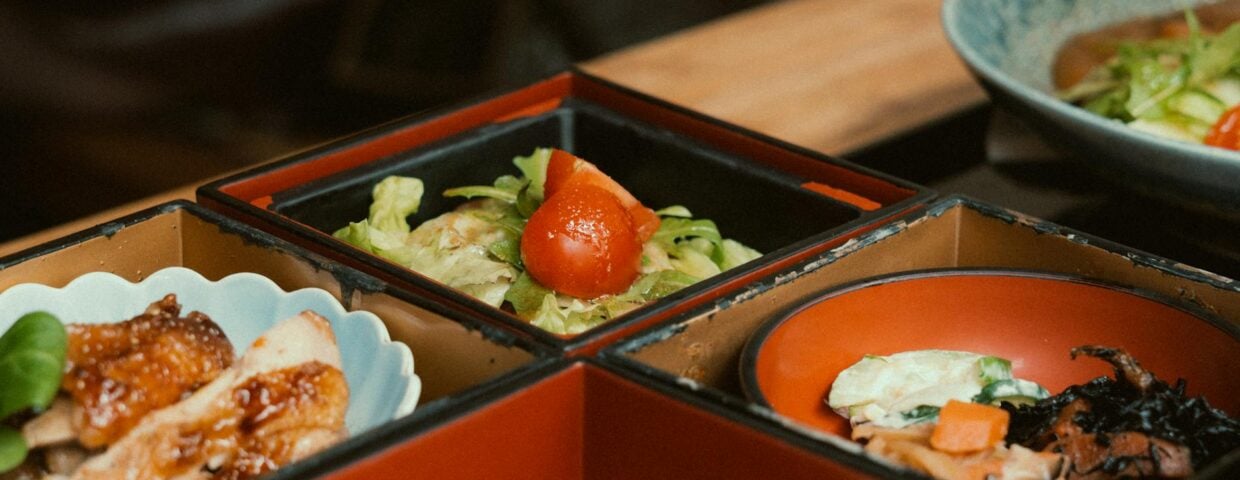
Shojin ryori (精進料理) is Buddhist temple cuisine — part of Japan’s broader cultural traditions, developed in Japanese Zen monasteries and strictly plant-based by religious requirement. It contains no meat, no fish, no fish stock — and also no onion, garlic, leek, or other alliums, which are considered agitating to the spirit in Zen Buddhist tradition. It is subtle, seasonal, and in the hands of a skilled cook, genuinely exquisite.
This is the real answer for vegans who want to eat well in Japan: find a shojin ryori restaurant or temple dining experience. The format is typically a multi-course meal built around tofu, seasonal vegetables, pickles, rice, and miso soup made from kombu dashi only. The presentation is careful and beautiful. The flavours are quiet and deep rather than immediately assertive.
Kyoto is the capital of shojin ryori. Tenryuji in Arashiyama offers shojin ryori lunch in the temple’s dedicated dining room — reservations required, prices from around ¥3,500. Daitokuji, a large Zen temple complex in north Kyoto, has several sub-temples that serve shojin ryori. In Tokyo, a number of dedicated restaurants serve the style without a temple connection.
Prices range from ¥3,000 to ¥8,000 per person for a full shojin ryori course. This is not cheap, but for a vegan traveller in Japan, it is the clearest guaranteed experience of eating well without compromise.
Other Cuisines That Help
Japan has excellent non-Japanese cuisines in its major cities that are more straightforwardly vegetarian-friendly.
Indian restaurants are common in Tokyo (Shinjuku, Shin-Okubo), Osaka, and Kyoto. They are used to clearly marking vegetarian dishes and managing dietary requirements. Japanese Indian food is generally good — the country’s attention to ingredient quality and cooking precision extends to imported cuisines.
Chinese restaurants: Chinese cooking has a strong vegetarian tradition (Buddhist Chinese vegetarian cooking is related to shojin ryori), and many Chinese restaurants in Japan can accommodate vegetarians with reasonable advance communication.
Italian restaurants: Japan has a deep relationship with Italian food, and Italian restaurants — particularly in Tokyo — are often vegetarian-navigable, with pasta and pizza options that can be made without meat.
Apps and Tools
HappyCow is the most comprehensive global vegetarian and vegan restaurant database and works well in Japan’s major cities. The Tokyo and Kyoto listings are extensive. Rural coverage is thin.
Vegewel is a Japan-specific app and website for vegetarian, vegan, and allergy-restricted dining. It has better coverage of smaller cities and is maintained by people focused on the Japan market specifically. The English interface is functional.
Convenience Stores as a Resource
Japanese convenience stores (7-Eleven, Lawson, FamilyMart) stock a range of items that can work for vegetarians. Allergen information is printed on all packaged food by law — look for products that do not list fish or animal products. Specific safe items include: plain rice balls with umeboshi or kombu filling, plain steamed rice, certain salads, most fruit, some bread. Convenience store food is not exciting, but it is a reliable fallback when other options are limited.
City by City
Tokyo is the most manageable city for vegetarians and vegans in Japan. Neighbourhoods like Shimokitazawa, Nakameguro, and parts of Shinjuku have dedicated vegan restaurants; the international food scene is wide; Indian, Italian, and other cuisines are abundant. It is possible to eat well as a vegan in Tokyo with moderate planning.
Kyoto is the shojin ryori capital and has more specialist vegetarian-aware restaurants than its size would suggest, partly because of the temple tourism that drives awareness of plant-based dining. Navigating regular restaurants remains challenging, but the high end is well-served.
Osaka is harder. The food culture is meat-forward — takoyaki, kushikatsu, okonomiyaki with pork belly — and the restaurant scene is less internationally oriented than Tokyo. There are dedicated vegan spots in Namba and Shinsaibashi (check HappyCow for current listings), but it requires more advance planning. Our Osaka food guide covers the general eating landscape.
Rural Japan is the most challenging context. Small-town restaurants may have no vegetarian options at all, and communication about dietary restrictions is harder without English support. If travelling outside the major cities, research and plan ahead rather than relying on finding something workable on arrival. Convenience stores become more important as a backup.
One More Thing: Soy Sauce Contains Wheat
For vegans who are also avoiding gluten: standard Japanese soy sauce (shoyu) contains wheat. This affects many dishes, since soy sauce is used as a seasoning throughout Japanese cooking. Tamari is a wheat-free soy sauce and is increasingly available, but not everywhere. Our gluten-free Japan guide covers this in detail.
The broader Japanese food cultural context — why food works the way it does here — is in our Japan food guide and our Japanese food culture piece. For expats navigating dietary needs long-term, our guide to living in Japan has practical ongoing advice.
For restaurant discovery: HappyCow Japan and Vegewel are the most useful active resources.
Japan is manageable. It rewards preparation more than most countries, and the reward for that preparation — a shojin ryori lunch in Arashiyama, an excellent Indian dinner in Shinjuku, navigating a market with enough Japanese to ask the right questions — is a genuinely good trip. Go in knowing the difficulty and you will be fine.