Natto in Japan: What It Is, What It’s Like, and Whether You Should Try It
Within the Japan food guide, natto is in a category of its own. Japan has no shortage of foods that divide opinion. Fugu is dangerous if prepared incorrectly. Shirako is fish sperm. Basashi is raw horse. But none of these generate the same domestic debate as natto — a food that half of Japan eats for breakfast every day and the other half refuses to touch.
Natto (納豆) is fermented soybeans. The fermentation produces a sticky, stringy coating and a smell that resembles, to those who find it confronting, something between ammonia and old cheese. To those who eat it daily, it smells like breakfast.
It is, by almost any objective measure, an acquired taste. The question is whether it’s worth acquiring.
What Natto Actually Is
Natto is made from whole soybeans fermented with Bacillus subtilis var. natto — a bacterial strain that produces the characteristic stickiness (neba-neba in Japanese, meaning slimy or sticky, which is not a pejorative in Japanese food culture) and the distinct smell.
The process: soybeans are soaked, steamed, then inoculated with the bacterial culture and packed into small polystyrene containers — typically 40–50g — wrapped in straw traditionally, though industrial production moved to plastic decades ago. They ferment at warm temperatures for around 24 hours, then are chilled and sold refrigerated.
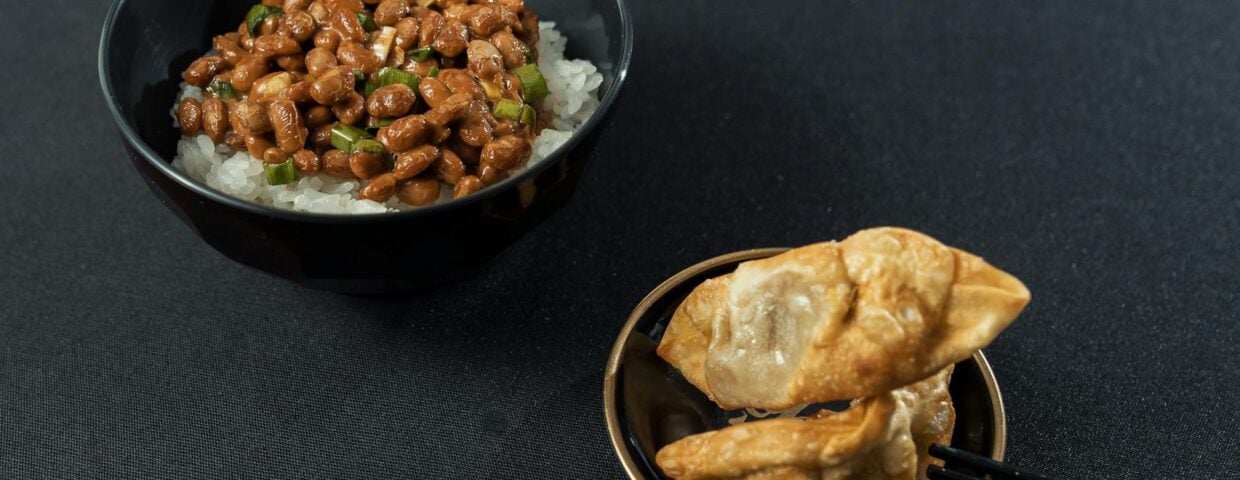
The result: dark brown, slightly shiny soybeans covered in fine white sticky strands that pull when you lift them. The smell is present from the moment you open the packaging.
What It Tastes Like (Honestly)
The smell is the first thing. Pungent, fermented, slightly sharp. For people encountering it for the first time, the smell often triggers a response before the flavour has a chance.
The flavour itself is earthy, nutty, and umami-forward — similar to a strong aged cheese or a dark, intensely savoury bean dish. The bitterness that some people report comes from the fermentation; it’s milder in shorter-fermented or smaller-bean varieties.
The texture is the other challenge. The sticky coating is viscous — it coats the chopsticks, creates visible threads when you lift the beans, and doesn’t behave like anything else in most people’s culinary experience. Stirring natto before eating is standard practice; the more you stir, the more air you incorporate, and the flavour mellows slightly.
With the standard accompaniments — the small packet of karashi (hot Japanese mustard), the tare (a soy-based sauce) — served over warm white rice, natto becomes something more cohesive. The mustard cuts through the richness, the tare adds salty depth, the rice provides something neutral to balance against. This is the correct format.
How to Eat Natto
The ritual matters. Most natto is sold in small individual packets that include two small sachets: karashi mustard and tare sauce. The process:
1. Open the container — the sticky web inside is normal.
2. Add the tare and karashi.
3. Stir vigorously with chopsticks — 50 to 100 stirs is not unusual. Stirring incorporates air and changes the texture. The neba-neba becomes more web-like.
4. Eat over warm white rice. Place the natto on top and mix slightly, or eat them together bite by bite.
Optional additions that genuinely improve natto:
- A raw egg yolk stirred in (rounds out the flavour significantly)
- Sliced spring onion (negi)
- A sheet of toasted nori torn into the bowl
- Grated daikon radish
- Kimchi (not traditional but widely enjoyed)
Natto on toast — while it sounds unlikely — is eaten by a subset of Japanese people, particularly younger ones. The combination works better than it sounds, especially with a thin layer of karashi.
Types of Natto
Not all natto is the same. The variety matters more than most non-Japanese eaters realise.
Hikiwari natto: Crushed or minced soybeans rather than whole. Finer texture, milder flavour, slightly less sticky. Often recommended for people trying natto for the first time. The smaller surface area means less intense smell.
Kotsubu (small bean) natto: Small whole beans — slightly milder than standard large-bean natto. The size makes it easier to handle on chopsticks.
Okame natto (standard): The most common size, sold in three-pack containers across Japan. This is what you’ll find at every convenience store and supermarket. Strong flavour, classic texture.
Mito natto (large bean): From Mito city in Ibaraki Prefecture, the acknowledged natto capital of Japan. Larger beans, longer fermentation, stronger flavour. For experienced natto eaters.
Dried natto (kansou natto): Dried, sometimes seasoned with soy sauce and sugar. Eaten as a snack rather than a meal component. Much more approachable — the texture is crunchy rather than sticky, and the smell is minimal. A good entry point.
Natto Culture: Where It’s Eaten and Why
Natto is a breakfast food above all else. At ryokan inns, it arrives as one of the small side dishes in a traditional Japanese breakfast. In homes across eastern Japan, it sits on the breakfast table as a staple, alongside miso soup and rice.
The cultural geography of natto is one of Japan’s more interesting regional divides. Eastern Japan — particularly the Kanto region (Tokyo, Yokohama) and Tohoku in the north — is natto country. Ibaraki Prefecture, home of Mito city, produces more natto than anywhere else in Japan and takes visible pride in this. The city has a natto museum, annual natto festival, and several shops devoted entirely to natto varieties and natto-based products.
Western Japan is a different matter. Osaka has an openly hostile relationship with natto. The city’s food culture — built around takoyaki, okonomiyaki, and dishes where flavour is bold and immediate — has little patience for natto’s subtlety. Survey data consistently shows that western Japanese consume far less natto than their eastern counterparts. In Osaka and Kyoto, asking a local about natto often produces a grimace. This is part of the cultural texture of Osaka’s food identity.
In a broader sense, natto is part of what makes Japanese food culture distinctive — the way regional food identity runs deep, the acceptance of fermented and pungent flavours as breakfast staples, the daily ritual of a traditional Japanese morning.
Should You Try It?
Yes — with the right approach.
The wrong way: opening a pack of large-bean natto cold and eating it plain without the accompaniments. This is the fastest route to deciding you hate it.
The right way:
- Start with hikiwari (crushed) or kotsubu (small bean) variety — milder
- Use the mustard and tare that come in the packet
- Eat it warm, over fresh white rice
- Add a raw egg yolk if available
- Try it at a ryokan breakfast, where it’s already part of the meal and you’re eating it in context
The ryokan breakfast setting is genuinely the best introduction — natto is one small dish among many, you’re in a relaxed environment, and the surrounding food provides context. If it’s not for you in that setting, it’s probably not for you.
For the record: the majority of non-Japanese people who try natto properly — in the right format, with the right accompaniments — don’t love it immediately. A smaller proportion come to genuinely enjoy it after a few attempts. A smaller proportion still become devotees. The question isn’t whether you’ll love it on the first try; it’s whether it’s worth one honest attempt.
It is.
Where to Find Natto in Japan
Ryokan breakfast: The easiest and most natural setting. It will be there if you want it.
Convenience stores: Every 7-Eleven, Lawson, and FamilyMart in Japan sells natto — three-packs of small containers in the refrigerated section, usually ¥100–150 for a pack. The standard Okame natto is reliable. This is how most of Japan buys and eats it daily.
Supermarkets: Wider variety than convenience stores, including hikiwari, kotsubu, large-bean varieties, and regional brands. The Ibaraki-produced brands are worth trying if you see them.
Mito, Ibaraki: The pilgrimage option. Mito city is 70 minutes by limited express train from Tokyo’s Ueno station. The Kairakuen garden (one of Japan’s three great gardens) is the tourist draw, but natto shops in the surrounding streets are the food reason to visit.
Natto sushi: Available at kaiten sushi chains and some specialist shops — natto wrapped in nori, placed on rice. A manageable way to try it in small quantity. See the Japan sushi guide for kaiten sushi recommendations.
Natto is one part of what makes eating in Japan endlessly interesting — the specificity of regional food culture, the fermented traditions that run through Japanese cuisine, the breakfast rituals that different parts of the country share or argue over. For the full picture, start with the Japan food guide.
External reference: NHK World — Natto Documentary — NHK’s exploration of natto culture, its regional significance, and why Japan is so attached to it.