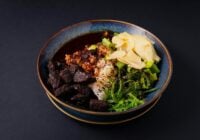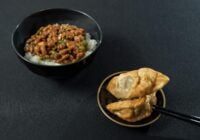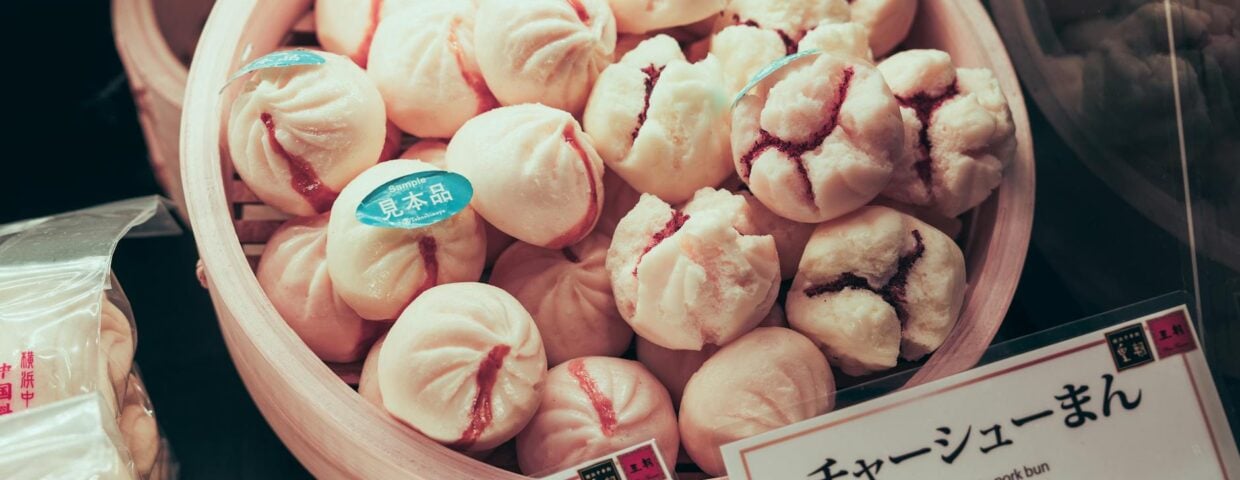
Osaka has a food culture that is not subtle about itself. Other Japanese cities have good restaurants and notable dishes; Osaka has an identity built around eating. The phrase kuidaore — roughly “eat until you drop” — is applied to Osaka so often it risks becoming a cliché, but it describes something real. People here spend more of their income on food than in other Japanese cities. Restaurants are taken seriously not just by food critics but by ordinary people who have strong, defended opinions about which takoyaki shop is best. The standard of eating across the price range — from a standing ramen counter to a high-end kaiseki restaurant — is consistently high in a way that is genuinely unusual.
Having lived in Osaka for over fifteen years, I can tell you that this is not a tourist board invention. It is simply how the city works. For the broader context of eating in Japan, Osaka is where the argument usually starts.
Why Osaka Eats the Way It Does
The historical explanation matters here. Osaka was, for most of Japanese history, the country’s primary commercial hub. The phrase tenka no daidokoro — “the nation’s kitchen” — refers to Osaka’s role as Japan’s distribution centre during the Edo period: rice, fish, and produce from across the country moved through Osaka’s markets before going elsewhere. The merchants and traders who ran this system developed a food culture that prioritised value and quantity alongside quality. You were not eating to signal status; you were eating because the food was good and there was a lot of it.
That logic persists. Osaka restaurants tend to be more generous in portion size than Tokyo equivalents at the same price point. The lunch set culture is well-developed — a proper teishoku (set meal) of main dish, rice, miso soup, and pickles for ¥800–1,200 is easy to find in almost any neighbourhood. The city is more affordable than Tokyo for eating well, and people here notice and care about that.
Dotonbori: What It Is and How to Navigate It
Dotonbori is a canal district in central Osaka — the canal itself runs east-west, and the area around it (particularly Dotonbori-dori, the street running parallel to the south side of the canal) is the densest concentration of restaurants and food stalls in the city. It is also, inevitably, a major tourist zone, and the two things are in genuine tension.
The honest breakdown: the famous Glico running man sign is worth a look for thirty seconds. The restaurants immediately around it are mostly mediocre and expensive. The better food in Dotonbori is a few streets away from the most photographed spots, in smaller operators without English menus and with queues of local people at lunchtime.
What is worth eating in Dotonbori: takoyaki from one of the smaller operators (Dotonbori Kukuru has good product without being the most famous name), fresh okonomiyaki made to order. What to skip: the giant illuminated crab restaurants, the chain sushi places, anything with a discount voucher QR code on the door.
The canal itself is more pleasant in the evening when the neon is reflected in the water. Dotonbori is worth an hour or two, but it is not where you will eat your best meal in Osaka.
Shinsekai: The Neighbourhood Worth the Detour
Shinsekai is the area around Tsutenkaku tower in south Osaka, and most tourists who come to Osaka never see it. That is a mistake. It is a working-class neighbourhood that has retained a character that central Osaka has largely lost — a bit rough around the edges, deeply local, genuinely cheap.
The dish here is kushikatsu: skewers of various ingredients (pork belly, prawn, onion, lotus root, hard-boiled quail egg, green pepper, cheese, mushroom, and many others) dipped in a thin batter, coated in fine panko breadcrumbs, and deep-fried until golden. They are served with a shared pot of Worcestershire-adjacent dipping sauce.
The rule, posted prominently in every kushikatsu shop in Shinsekai: no double-dipping. You dip your skewer once. If you want more sauce, use the raw cabbage leaves that are provided free of charge to scoop sauce onto your skewer. The rule exists because the sauce is communal and people dip from the same pot. Violating it is genuinely offensive and will get you told off. Follow the rule; it is reasonable.
The chain Daruma claims to have invented kushikatsu in Shinsekai, and it remains the area’s most visible operator. The food is reliable rather than exceptional, but for a first experience it covers the range. Order a mix: start with the standard pork (buta), add prawn (ebi), try the lotus root (renkon) and the cheese. Keep ordering until you have had enough, which will be more than you expect.
Surrounding Shinsekai: the Tennoji area has good everyday restaurants and the Tennoji zoo. The walk between Shinsekai and the Tennoji area is pleasant and still has an old Osaka feel. See our Japan street food guide for more on kushikatsu and Osaka’s street food culture generally.
Kuromon Ichiba Market
Kuromon Ichiba (▲▲▲▲▲▲▲▲▲▲) is Osaka’s main covered market — a long, roofed arcade of around 170 stalls selling fresh seafood, produce, meat, pickles, and cooked food. It has been operating since the early 19th century and has a different atmosphere from Kyoto’s Nishiki Market: less sanitised, more working, louder.
The market is best in the morning, when the seafood is freshest and the stall operators are in full flow. You can eat as you walk: freshly grilled scallops, sea urchin on rice, fugu sashimi, oysters, grilled wagyu beef on a stick. The prices are higher than a supermarket but reasonable for the quality and the experience. It is genuinely a market used by Osaka restaurants and home cooks, not only a tourist destination — though the tourist volume has increased significantly in recent years.
The Osaka Dishes in Depth
Takoyaki
Takoyaki is Osaka’s identity food. Not in the sense of being famous — it is famous everywhere in Japan — but in the sense that Osaka people have strong opinions about where the best version is, and those opinions differ, and the argument is ongoing and taken seriously. Every neighbourhood has its preferred local shop. The Osaka hierarchy of takoyaki shops is a genuine subject of local conversation.
The ball: a dashi-seasoned batter poured into a cast-iron mould, with octopus, tenkasu (tempura scraps), pickled ginger, and spring onion. The cook rotates each ball with a pick as it sets, creating a sphere that is crisp outside and molten inside. The toppings — takoyaki sauce, mayonnaise, seaweed powder, and katsuobushi (bonito flakes that wave in the steam) — go on immediately before serving. The correct way to eat them is immediately. They are significantly worse after five minutes.
Okonomiyaki
Osaka-style okonomiyaki is different from Hiroshima-style (where the ingredients are layered) — in Osaka, everything is mixed into the batter before cooking. The base is cabbage, egg, and flour; from there, additions vary: pork belly is standard, seafood versions are common. At a tabletop-griddle restaurant, you mix and cook it yourself, which is part of the experience.
Chibo in Dotonbori is the most tourist-accessible option — reliable, has English menus, the staff will help you with the cooking. Mizuno, also in Dotonbori, is the more serious version that Osaka people actually go to — it often has queues, the menu is more limited, the result is better. Both are legitimate options depending on what you want from the experience.
Oshi-zushi: Osaka’s Sushi Tradition
Before Edo-mae (Tokyo-style) nigiri sushi became the globally recognised form, Osaka had its own sushi tradition: oshi-zushi, pressed sushi. Fish (or other toppings) is layered over seasoned rice in a wooden mould, pressed firmly, and then cut into rectangular pieces. The result is denser and more vinegar-forward than nigiri, the rice more compressed, the flavour profile different.
Battera — pressed mackerel sushi, with a thin sheet of kelp on top — is the Osaka pressed sushi to seek out. It is sold in specialist shops, in the depachika of department stores, and at Kuromon market. It is a specifically Osaka thing that you do not find with the same quality or prevalence in other cities.
Fugu
Osaka is the fugu (pufferfish) capital of Japan. The fish’s internal organs contain tetrodotoxin, a potentially fatal poison, and its preparation requires a special prefectural licence. Osaka accounts for the largest consumption of fugu in the country. A fugu course dinner — sashimi, hot pot (tecchiri), grilled skin, rice porridge made from the hot pot stock — is a specific Osaka experience. It is expensive (¥10,000–30,000 per person), it is safe when prepared by a licensed chef, and it is worth doing once. The flavour is mild; the experience is the point.
Beyond Dotonbori: Where Osaka People Actually Eat
Fukushima, a neighbourhood immediately west of central Osaka, is the area locals eat out. It is dense with good restaurants — izakayas, specialty restaurants, wine bars — and has almost no tourist traffic. A walk along the main restaurant strip in Fukushima on a weekend evening looks like a different city from Dotonbori: Japanese people, no English menus, no large tourist groups. This is where you should go for a proper Osaka dinner if you are willing to point at menus.
Tenma has a long covered shopping street and a cluster of izakayas and standing bars that operate in the evening. It is one of the older-feeling parts of central Osaka and worth exploring for its atmosphere as much as its food. For more on izakaya culture, see our izakaya guide.
Nakazakicho, north of Umeda, is a neighbourhood of old wooden machiya buildings that has been gradually taken over by independent cafes, small restaurants, and vintage shops. It is quieter and more cafe-oriented than Fukushima, good for a daytime coffee and lunch.
Eating Cheap in Osaka
Osaka is genuinely more affordable than Tokyo for eating well, and the city’s food culture supports eating cheaply without sacrificing quality. Tachinomi (standing bars) are widespread — a beer and several small dishes at a standing counter for ¥1,500–2,000 is a completely normal Osaka evening. Lunch sets (teishoku) are generously sized and well-priced. Market food at Kuromon and the surrounding streets covers breakfast and lunch efficiently.
The full context for navigating Osaka as a food destination — and Japan generally — is in our Japan food guide. For visitors thinking about living or spending extended time in Osaka, our guide to living in Japan covers the practical realities. The official Osaka tourism site has a food section at osaka-info.jp with current restaurant recommendations and market information.
Osaka does not require explanation or context to enjoy — you can show up in Dotonbori and eat well through trial and error. But knowing the neighbourhoods, the dishes, and the logic behind the city’s food culture will get you to the better version of the experience faster.