Japan Ramen Guide: Types, Regions, and How to Actually Eat It
There’s a ramen shop in Tokyo called Fuunji that opens at 11am. By 10:45, there’s a queue down the street. By 1pm, it’s sold out. Nobody complains. Nobody leaves disappointed. That’s ramen culture in Japan — a bowl of noodles that inspires the kind of devotion most restaurants can only dream of.
Ramen in Japan isn’t what you think it is if your reference point is a packet of instant noodles or a restaurant outside Japan. It’s a craft industry with regional styles, specialist broths, and chefs who have spent decades learning a single discipline. The broth alone — in a serious shop — takes 12 to 18 hours to make. The noodle firmness is calibrated to the weight of the broth. Nothing is incidental.
This guide covers the main types of ramen, where to find the best versions of each, what to order, and how to navigate a Japanese ramen shop without standing at the entrance looking lost. It’s part of the wider Japan food guide.
The Four Main Ramen Styles
Tonkotsu
Origin: Fukuoka, Kyushu
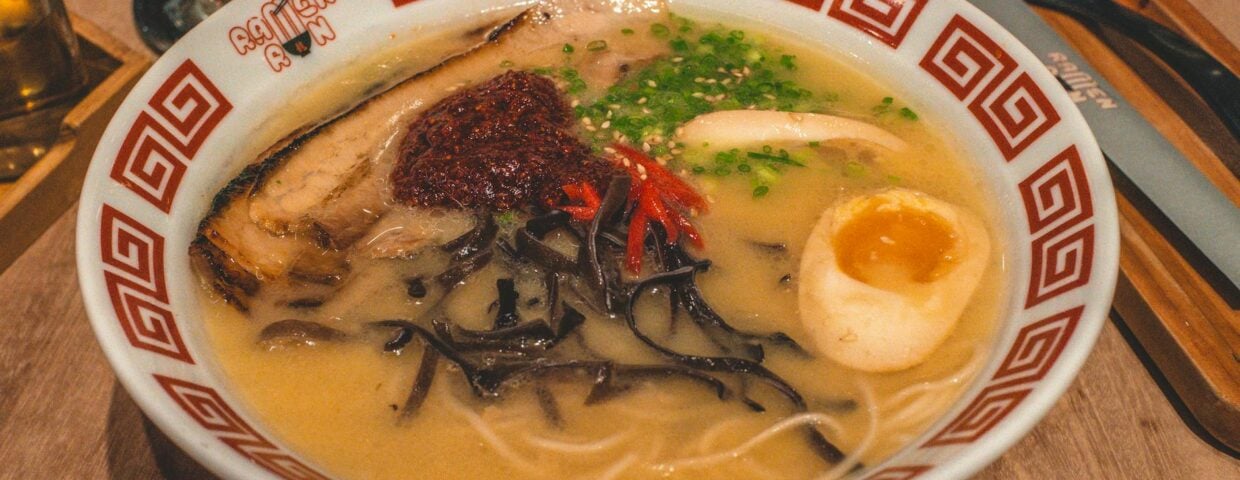
Tonkotsu broth is made by boiling pork bones at a hard rolling boil for 12 hours or more until the collagen breaks down and the broth turns thick, white, and opaque. The result is rich in a way that coats the bowl. Thin, straight noodles. Chashu pork belly, a soft-boiled soy-marinated egg (ajitsuke tamago), sliced bamboo shoots, nori, sesame seeds.
The original style from Hakata (the city district that gave Hakata ramen its name) is served fast — hayashi, meaning quick — and often with a side dish of garlic paste and pickled ginger to adjust as you eat. The custom of kaedama — ordering a second serving of noodles to drop into your remaining broth for a fraction of the bowl price — originated here.
Tonkotsu has spread across Japan and internationally to the point where it’s become the default expectation for what ramen is. That’s both deserved and slightly unfair to the other styles.
Best places to try it: Fukuoka’s Nakasu and Tenjin neighbourhoods for the street stalls (yatai) that operate late into the night. In Osaka, the Ippudo and Ichiran chains are reliable; Ichiran’s individual booth format — you sit alone, face a wooden screen, order on a form, and eat without interacting with anyone — is a deliberately solitary experience that either sounds perfect or slightly unnerving, depending on you.
Shoyu
Origin: Tokyo
Shoyu ramen predates tonkotsu’s national dominance. Clear, amber-coloured broth, built from chicken or dashi base with soy sauce seasoning. The flavour is deeply savoury but not heavy. Wavy noodles with some chew. Chashu pork, menma (fermented bamboo shoots), narutomaki (the white and pink fish cake), nori.
Tokyo ramen has always been shoyu-based at its core, and the style that’s experienced a significant revival in recent years is tori paitan — a chicken-based cloudy broth that sits somewhere between shoyu and tonkotsu in richness. Eating a bowl of proper Tokyo shoyu ramen in a 10-seat shop in Shimokitazawa or Koenji is the opposite experience from Hakata’s fast and loud tonkotsu counters — quieter, more considered, the broth more restrained.
Shio
Origin: Hakodate, Hokkaido
Shio means salt. The broth is clear or very pale — chicken, seafood, or a combination, seasoned only with salt rather than soy or miso. It’s the most delicate of the styles, which means the ingredient quality has nowhere to hide. Bad shio ramen is flat. Good shio ramen is precise and clean in a way that makes you slow down.
Hakodate in southern Hokkaido is where shio ramen developed, and it’s still the best place to eat it — especially the seafood-forward versions that use local shellfish in the broth. If you’re visiting Hokkaido and only eating Sapporo miso ramen, you’re missing something.
Miso
Origin: Sapporo, Hokkaido
Miso ramen was invented in Sapporo in the 1960s — a deliberate innovation to create a warming, hearty bowl suited to Hokkaido’s brutal winters. Thick, complex broth with a miso base, usually with stir-fried vegetables, ground pork or chashu, a generous knob of butter, and corn. The corn and butter sound incongruous and taste completely right.
The richest and most comforting of the four main styles. Eating it in Sapporo in winter, after a day of skiing, is a specific kind of perfect. The Susukino neighbourhood in Sapporo has dozens of miso ramen specialists within walking distance of each other.
Beyond the Big Four
The four styles above are the foundation, but the regional variations go much further:
Niboshi ramen (Tokyo, Chiba) — broth made from dried sardines (niboshi). Intensely savoury and slightly bitter. Polarising. Worth trying once.
Tsukemen — dipping ramen. The noodles and broth are served separately; you dip thick, room-temperature noodles into a concentrated hot broth with each bite. The broth is usually a fish-soy combination far more intense than standard ramen broth. Fuunji in Shinjuku is the most famous destination for this style.
Abura soba / mazesoba — brothless ramen. Noodles in a concentrated sauce at the bottom of the bowl, mixed together at the table. Rich, sticky, deeply flavoured. Tokyo’s Musashino Abura Gumi is often cited as the originator.
Tantanmen — Japanese adaptation of Chinese dan dan noodles. Sesame paste, chilli oil, ground pork, bok choy. Spicy and nutty. The most widely available “alternative” style outside the main four. For a completely different noodle register, udon is worth exploring on the same trip.
How to Actually Eat at a Ramen Shop
This is the part most guides skip, and it’s the part that makes the difference between a confusing experience and a good one.
The ticket machine (ken-bai-ki): Most dedicated ramen shops — particularly mid-range and cheaper ones — have a vending machine at the entrance where you buy your meal before sitting down. Choose your bowl, insert money, receive a ticket, hand it to the staff. The machine usually has photos. If there’s no English option, the most expensive button is often the house special or premium bowl; the second most expensive is usually the standard version. Point and smile if you need to.
Entering: When you walk in, staff will shout irasshaimase — “welcome.” You don’t need to respond. Wait to be seated or look for a sign indicating you can seat yourself. At busy lunch spots, there’s often a queue system where you wait outside until a seat opens.
Counter seating: Most ramen shops seat you at a counter facing the kitchen or a wooden screen. This is normal. You eat facing forward. You don’t need to make conversation.
Ordering customisation: Many ramen shops — particularly tonkotsu places — allow you to customise: broth richness (koku), saltiness (shio kagen), noodle firmness (kata, meaning firm, is the default preference for regulars), amount of fat, amount of spring onion. This information is often on the order form or the machine. Firma noodles (kata or barikata) hold up better in the broth over time.
Slurping: Fine. Normal. Functionally correct — slurping cools the noodles and aerates the broth, which affects flavour. The absence of slurping is more unusual in this context than the presence of it.
Finishing: Drink the broth. Or don’t — nobody will watch. Pay at the counter or machine on the way out. Gochisousama deshita (thank you for the meal) as you leave is always noticed and appreciated.
Solo dining: Ramen shops are one of the most comfortable places in Japan to eat alone. Counter seating is designed for it. Nobody will find it odd. It’s encouraged.
What to Order on Your First Visit
If you’re eating ramen for the first time in Japan and don’t know where to start:
Order the house special (osusume — the recommendation). At most shops this is marked on the menu or the machine. It will be whatever the chef considers their best bowl. This is not a cop-out — it’s what the shop wants you to eat.
Add an egg. The ajitsuke tamago — soft-boiled, soy-marinated, with a jammy yolk — is a near-universal addition worth ¥100–150.
Skip the rice on your first visit unless the shop is known for a rice dish. Ramen is already a complete meal.
Where to Eat Ramen in Japan: By Region
Tokyo: Fuunji (Shinjuku, tsukemen), Ichiran (chain, tonkotsu, the solo booth experience), Ivan Ramen (foreigner-owned, shoyu specialist, exceptional). The Nishiogikubo and Shimokitazawa neighbourhoods have concentrated clusters of independent shops — the same areas are worth exploring for sushi counters and izakayas on the same evening.
Osaka: Kinryu Ramen (Dotonbori, open 24 hours, tonkotsu, frequented at 3am), Menya Takei (miso ramen). Osaka isn’t primarily a ramen city — it’s an izakaya and street food city — but the ramen it does have is good.
Fukuoka: Shin-Shin (Tenjin, the most recommended shop by locals for Hakata tonkotsu), the Nakasu yatai stalls for the late-night experience. Eat here if you’re visiting Kyushu.
Sapporo: Sumire (miso ramen, widely considered the benchmark), Hokkaido Ramen Dojo (a dedicated ramen theme street at Sapporo station with several Hokkaido regional styles in one location — useful for comparison).
Kyoto: Kyoto ramen tends toward a lighter chicken-soy broth. Shin-Puku Saikan claims to have invented Kyoto-style ramen. Ippudo has a strong Kyoto outpost.
Ramen and Budget
Ramen is one of Japan’s great value meals. A standard bowl at a mid-range ramen shop: ¥800–1,200. Add an egg and a side of gyoza: ¥1,200–1,800 total. A full meal that took someone 18 hours to prepare.
High-end ramen — at destination shops with Michelin recognition or Tabelog ratings above 4.0 — might reach ¥2,000–3,500. Still remarkable value by international standards.
The best ramen in Japan is not at the most expensive shops. Some of the most celebrated bowls cost ¥900.
Ramen as Part of Eating in Japan
Ramen is one category in a Japanese food culture that rewards time and attention. If you’re building a food itinerary for Japan, it’s worth thinking about which regional style you want to try in which city — miso in Sapporo, tonkotsu in Fukuoka, tsukemen in Tokyo — rather than just finding the nearest ramen shop wherever you happen to be.
The shop matters. The style matters. And increasingly, the queue outside matters — not as an inconvenience, but as a reliable indicator that what’s inside is worth the wait.
For the full picture on eating in Japan — street food, izakayas, sushi, what to eat at a convenience store at 11pm — see the Japan Food Guide.
External references:
- Ramen Museum, Yokohama — a dedicated ramen theme park with eight regional shops, worth visiting if you’re in Yokohama and want to compare styles side by side
- Japan Tourism Agency on regional food culture