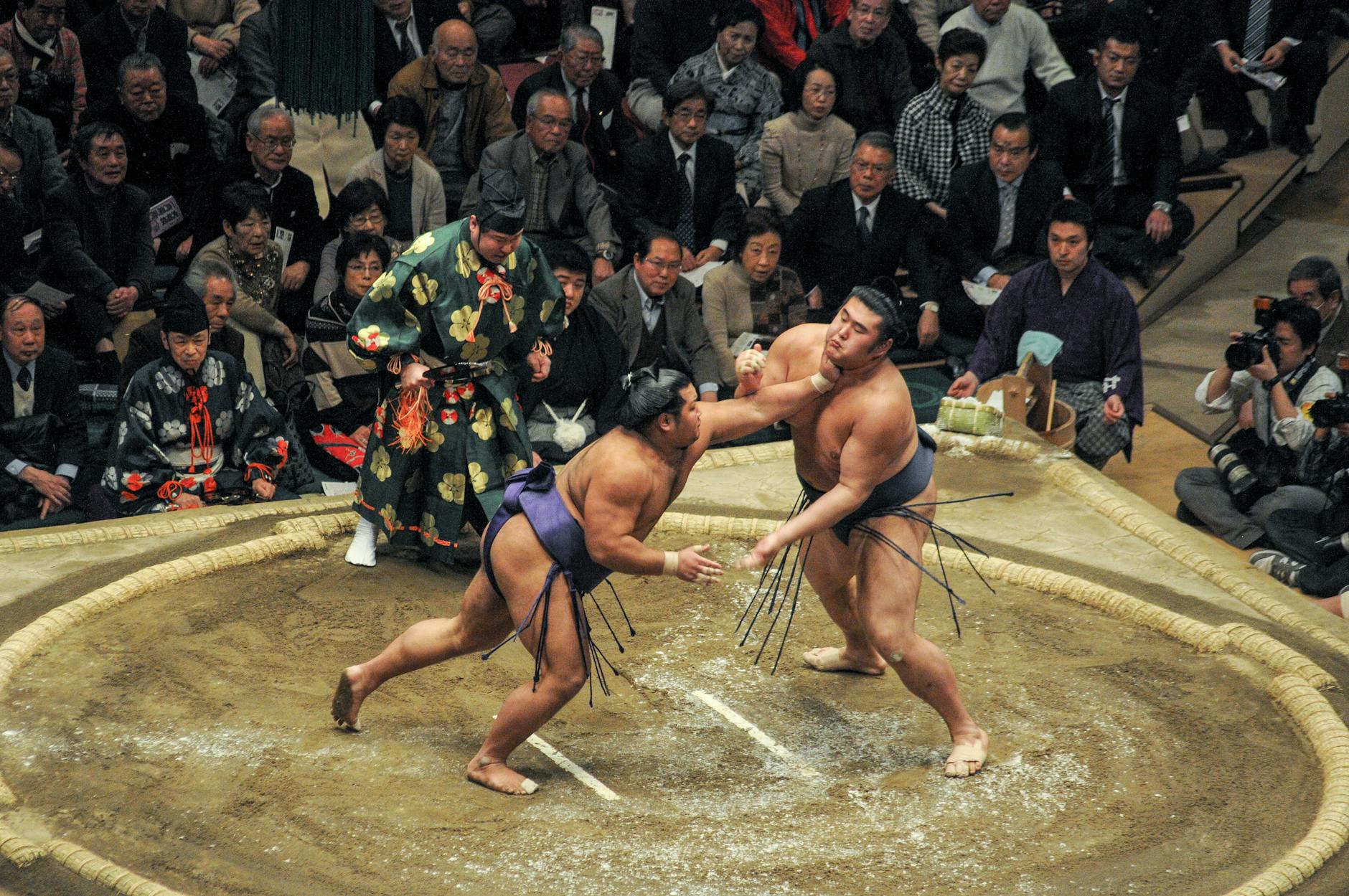
Sumo wrestling in Japan is the country’s iconic professional combat sport—and a ritual calendar. Bouts can end in seconds; the day is long on ceremony, warm-ups, and waiting for the upper ranks. If you want one cultural spectator experience that still feels athletic, a live honbasho (grand tournament) day is the clearest answer.
What you’re watching (plain English)
Two rikishi face off in a circular ring (dohyo). A wrestler loses by stepping out or touching down with anything but the soles of the feet (simplified). Before the clash: salt throwing, staring contests, false starts—the psychology is part of the show. Ranking structure (from lower divisions up through makuuchi and yokozuna) shapes who appears when; mornings are lower ranks, evenings build toward stars.
The six-tournament pattern
Professional sumo runs six grand tournaments a year in a settled city pattern. Exact start dates shift yearly—confirm on the Japan Sumo Association schedule before you book travel.
| Traditional month | City (pattern) | Traveler note |
|---|---|---|
| January | Tokyo | Cold season; popular with winter visitors |
| March | Osaka | Good Kansai itinerary fit |
| May | Tokyo | Pleasant weather window for many trips |
| July | Nagoya | Hot; plan hydration and indoor time |
| September | Tokyo | Post-summer return to capital |
| November | Fukuoka | Kyushu leg opportunity |
How to get tickets (process, not prices)
- Official / authorized channels first: Japan Sumo Association ticket info and major ticket platforms used for basho sales.
- Seat types vary: chair seats vs traditional box-style seating—read diagrams; boxes may suit groups and floor-sitting norms.
- Buy early for weekends and final days: demand rises toward the end of a tournament and on holidays.
- Same-day options: sometimes exist for weekday lower-demand sessions—never rely on them for a once-in-a-trip plan.
- Skip invented price lists: seat costs change by tournament and category—check the seller’s live page.
What a live day feels like
- Arrive ready for a long arc: early divisions educate you; top division is the climax.
- Food and drink vendors are part of the culture—follow venue rules.
- Photography rules exist; don’t use flash in ways that disturb wrestlers or neighbors.
- Cheer loudly at the right moments; don’t throw objects into the ring.
- If you’re in a box seat, learn the shoe/cushion etiquette from ushers or neighbors.
Etiquette quick list
| Do | Don’t |
|---|---|
| Stand/cheer with the crowd’s energy | Reach into the dohyo area |
| Follow usher instructions for box seating | Block views with large flags/signs if restricted |
| Keep aisles clear during busy changeovers | Assume every seat allows the same picnic setup |
If your dates miss a basho
Outside tournament months, look for museum exhibits, stable visit programs that are publicly offered (availability changes), or sumo shows aimed at visitors—quality varies. A scheduled honbasho remains the gold standard for first-timers.
FAQ
How long should I stay?
Many travelers stay into the evening ranks even if they arrive mid-afternoon. A full day teaches the rhythm best.
Is English support available?
Venues and ticket sites increasingly offer English information, but it varies—download seat maps and rules before you go.
Is sumo only Tokyo?
No—three Tokyo basho plus Osaka, Nagoya, and Fukuoka in the annual pattern.
Related on Fly JPN
Japanese culture and traditions · Japanese festivals · Best places to visit · Japan travel guide