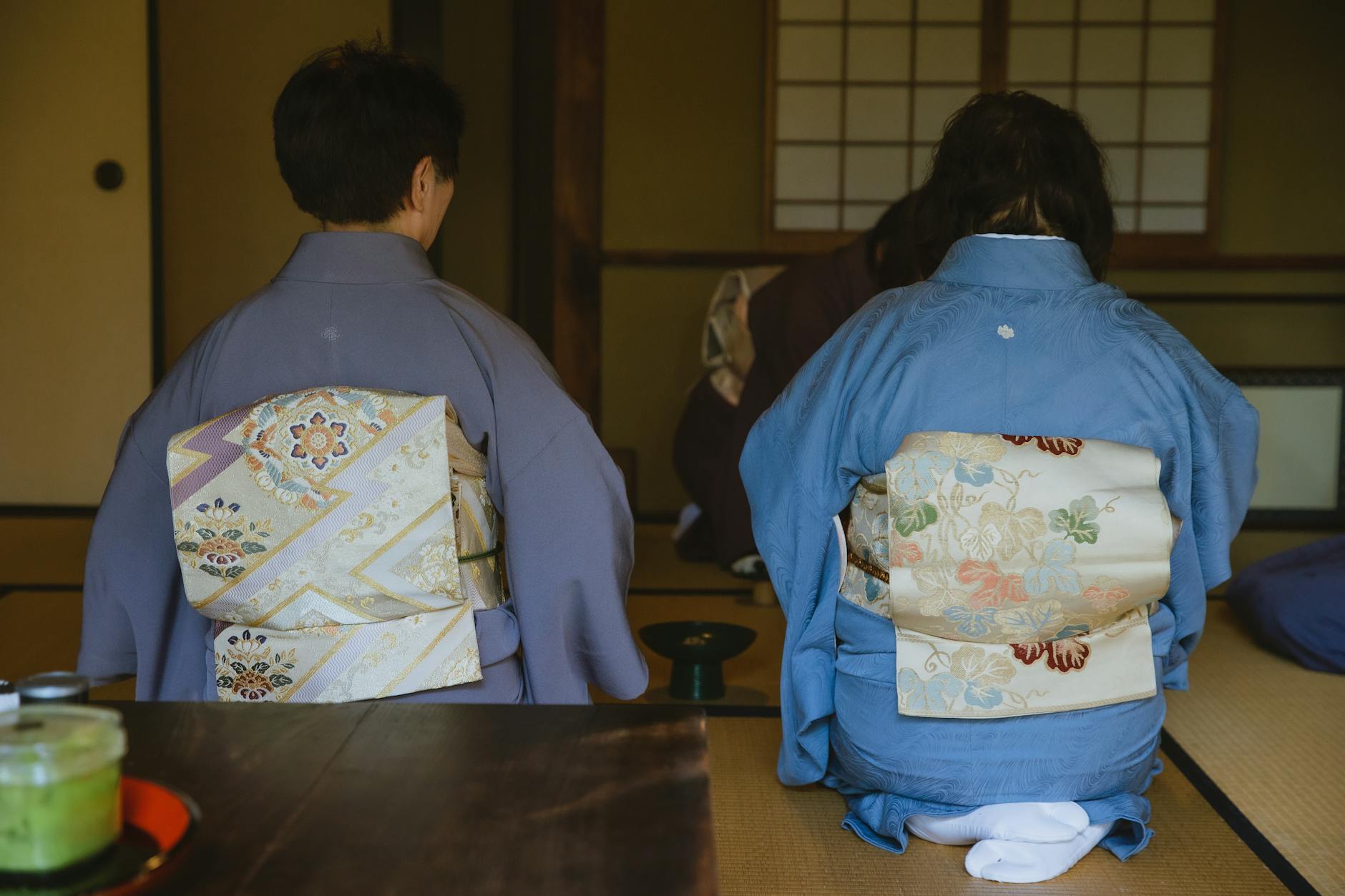
A Japanese tea ceremony (茶道 sadō / 茶の湯 chanoyu) is a carefully staged way of preparing and sharing matcha—not a casual café pour. As a guest, you are there to receive hospitality with attention: sweets, a whisked bowl of tea, and a quiet rhythm of bows and small movements. Most travelers meet a shortened, taught experience rather than a multi-hour formal gathering.
Answer first: what you are walking into
Think of it as a performance of care. The host focuses on water, tea, utensils, and the room; guests focus on receiving without rushing. Principles often summarized as harmony, respect, purity, and tranquility show up as manners more than as a lecture. You do not need to “perform Japan”—you need to watch, follow prompts, and stay present.
Guest-seat flow (typical tourist session)
- Enter and settle. Remove shoes if asked; sit as directed (chairs are common for visitor sessions; floor seating appears in more traditional rooms).
- Sweet first. A confection softens the bitterness of matcha—eat it before the tea arrives.
- Watch the preparation. Whisking, rinsing, and utensil handling are part of the experience; phones usually stay away unless the host invites photos.
- Receive the bowl. Often with a bow; you may be shown how to turn the bowl slightly before drinking.
- Drink and return. Finish or leave a little as instructed; return the bowl carefully; thank the host.
A full formal gathering (chaji) can run much longer and may include a meal—most visitor bookings are abbreviated tea-and-sweet sessions with English guidance.
Etiquette that actually matters
| Moment | Do | Avoid |
|---|---|---|
| Arriving | Follow seating cues; keep voices low | Loud phone calls in the tea space |
| Sweets | Finish before tea when told | Saving sweets “for later” if the host timed them for the tea |
| Bowl | Hold with care; turn if shown how | Spinning or inspecting utensils without invitation |
| Photos | Ask once; follow the house rule | Flash, blocking the host, filming other guests |
| Clothing | Clean, modest; easy to sit | Strong perfume that fills a small room |
Formal ceremony vs tourist experience
Formal practice lives in tea schools and dedicated tea rooms: years of study, seasonal utensils, and gatherings measured in hours. Traveler experiences compress the same ideas into 30–90 minutes with explanation—valuable as an introduction, not as a claim that you “completed” the Way of Tea. If authenticity matters to you, ask whether a licensed practitioner hosts, whether the room is a real tea space, and how much instruction vs silent ritual you want.
Where travelers usually try it
Kyoto has the densest cluster of temple-adjacent and machiya tea experiences; Tokyo offers cultural centers, hotels, and garden-linked sessions that are easier to book around a city itinerary. Regional towns with historic districts sometimes run quieter sittings. Treat listings as starting points—confirm language support, seating style, and cancellation rules with the host. Do not rely on blog price tables; fees move with season, kimono add-ons, and group size.
For wider context, see Japanese culture and traditions.
FAQ
Do I need to speak Japanese?
No for most visitor sessions marketed to travelers. A few traditional houses run Japanese-only; check before you book.
Is matcha always used?
Classic chanoyu centers on powdered green tea (matcha). Other tea styles exist in Japan, but “tea ceremony” in English search usually means the matcha ritual.
Can kids join?
Sometimes, with age minimums and quieter expectations. Ask the host—small rooms and hot water need judgment.
What should I wear?
Comfortable clothes you can sit in. Kimono rentals are optional add-ons at some venues, not a requirement for respect.