Japanese desserts operate on a different frequency from Western ones. The sweetness level is lower, the emphasis on a single seasonal ingredient is higher, and the visual presentation — particularly in traditional confectionery — is treated as seriously as the flavour. Understanding this before you start eating makes the experience significantly richer. A piece of wagashi that tastes “not that sweet” to someone expecting a French pastry is, in its own register, a precise and considered thing.
This guide — part of the wider Japan food guide — covers the full range: ancient confectionery tied to tea ceremony, modern convenience store pudding that is genuinely excellent, summer shaved ice that bears no resemblance to the festival machine version, and the Hokkaido parfait culture that is, in its own way, a serious culinary tradition. The connecting thread is that Japan takes its sweets seriously — at every price point and in every format.
Wagashi: The Traditional Core
Wagashi (和朙子) is the category of traditional Japanese confectionery, and it is both older and more complex than most visitors realise. The broad division is between namagashi (fresh wagashi, high moisture content, must be eaten within days) and higashi (dry wagashi, pressed sugar or rice flour, longer shelf life). Both are tied to the tea ceremony — wagashi is eaten before drinking matcha to balance the bitterness of the tea — and both change with the seasons.
The seasonal nature of wagashi is not marketing. Namagashi from a serious shop in April will have cherry blossom motifs, delicate pink nerikiri (a kneaded white bean paste confection) shaped like petals or small flowers. In October, the same shop will produce chestnut wagashi and maple leaf designs in amber and rust. The appearance reflects the season; eating something seasonally correct is part of the experience.
The central ingredient in most wagashi is anko — sweet red bean paste made from azuki beans. There are two main types: tsubu-an (chunky, with visible bean pieces) and koshi-an (smooth, strained). Different wagashi use different types; the distinction matters to Japanese people in the way that dark versus milk chocolate matters in the West. Getting a preference and sticking to it is acceptable.
Kyoto is the capital of wagashi. The city’s connection to the imperial court and the tea ceremony tradition means its wagashi culture is older and more refined than anywhere else. Kagizen Yoshifusa in the Gion district is one of the oldest wagashi shops in Japan — it has been operating since the Edo period and remains a serious destination for anyone interested in traditional confectionery. Their yokan (firm jellied anko) and their seasonal namagashi are worth making time for. For more on Japanese food culture and traditions, see our culture guide.
Mochi: More Variety Than You Think
Most people outside Japan know mochi as a single thing — a round, chewy rice cake, usually with ice cream inside. In Japan, mochi is a category with significant internal variety, and the different types are distinct enough to be treated separately.
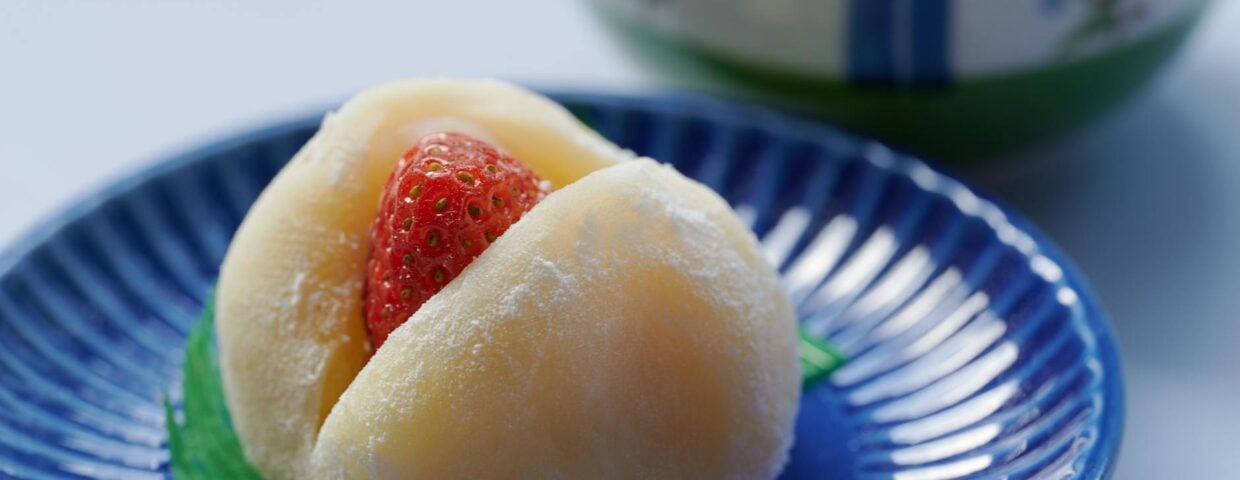
Daifuku is the round, filled mochi most people are familiar with: a soft outer shell of mochi rice cake, filled with anko or other fillings. Ichigo daifuku — strawberry daifuku — has a whole strawberry inside alongside the anko. The combination of cold fruit, sweet bean paste, and chewy outer shell is one of the more specifically Japanese flavour experiences, and it is seasonal (strawberry season is roughly December to May in Japan).
Sakura mochi is a spring-specific mochi: pink-tinted rice or glutinous rice cake wrapped in a pickled cherry leaf. The leaf is slightly salty, which plays against the sweet anko inside. The leaf is edible — many people eat it, some don’t. It is the defining sweet of cherry blossom season and appears in shops from roughly February through April.
Kusa mochi (“grass mochi”) is made with mugwort (yomogi), which gives it a distinctly green colour and a mild, slightly herbal flavour. It is less sweet than standard mochi and works well alongside bitter matcha.
Warabi mochi is the outlier. It is not made from glutinous rice but from bracken starch (warabi), which gives it a completely different texture — softer, more translucent, almost gel-like. It is served cold in summer, dusted with kinako (roasted soybean flour) and drizzled with black sugar syrup (kuromitsu). The combination of slightly nutty kinako, sweet kuromitsu, and the cool, yielding texture of the mochi is one of the better summer eating experiences in Japan. Do not confuse it with regular mochi; the texture is unlike anything else.
Kakigori: The Serious Version
Festival kakigori — the brightly coloured shaved ice dispensed by machines into paper cones with fluorescent syrup — is fine for what it is. It is not what serious kakigori shops are doing.
At a dedicated kakigori shop, the ice is shaved from a large block (often natural ice, harvested in winter and stored, or made in controlled conditions that replicate natural ice’s crystal structure) using a hand-cranked or carefully calibrated electric blade. The result is not crushed ice but something closer to the texture of fresh powder snow — it melts on the tongue rather than crunching. The syrups are housemade from real fruit, matcha, or other ingredients. The toppings — anko, shiratama dumplings, condensed milk — are added with attention to how they interact.
The matcha and condensed milk combination is the benchmark order at most serious shops: the bitterness of the matcha and the sweetness of the condensed milk balance in a way that is considerably more interesting than it sounds.
Himitsudo in Yanaka, Tokyo (a quiet, old-feeling neighbourhood north of Ueno) is the most discussed serious kakigori shop in Japan. In summer, queues form before the shop opens. It typically sells out by early afternoon. The syrups change by season; the quality is exceptional. It is worth planning a morning around if you are in Tokyo in July or August. For more places to eat while in Japan, our Japan street food guide covers seasonal stall culture.
Dorayaki, Purin, and the Things Everyone Eats
Dorayaki is two small fluffy pancakes sandwiching a layer of anko. It is humble, ubiquitous, and underrated. Sold at convenience stores, specialist dorayaki shops, and supermarkets, it is a genuinely good everyday sweet — not refined, not seasonal, just reliable. The best versions have a slight honey flavour in the pancake and tsubu-an (chunky) anko that still has texture.
Purin is Japanese custard pudding — recognisably similar to crème caramel but with a firmer, more substantial set and a slightly eggy flavour that is more direct than its French equivalent. The caramel layer at the bottom (which becomes the top when inverted) is slightly bitter. Purin exists across a wide quality range: the Lawson Uchi Café purin, available at any Lawson convenience store for around ¥250, is genuinely good — denser and more flavourful than most visitors expect from a convenience store item. Dedicated purin shops in Tokyo (particularly in Jiyugaoka and Koenji) offer versions in ceramic moulds with more complex flavour profiles, but the convenience store version is an accessible and honest entry point.
Japanese Parfait Culture
The Japanese parfait is not the same object as a Western parfait. It is a tall, structured, elaborate construction — ice cream, fresh fruit, cereal, whipped cream, mochi, sometimes cake, sometimes red bean — built upward in a tall glass with apparent intention. Eating one requires a strategy.
This is particularly serious in Hokkaido, where the dairy quality (Hokkaido milk and cream are considered the best in Japan) supports an entire parfait culture. In Sapporo, there is an informal concentration of parfait bars in Susukino that stays open late — colloquially known as “parfait alley.” The logic is that after a night of drinking and eating, a cold parfait is an appropriate final act. These are not ironic. They are genuine, carefully constructed desserts being served at midnight to locals who have strong opinions about which shop’s version is best.
The Depachika: Where to Buy the Best
The basement floor (or floors) of a Japanese department store — the depachika — is the best place in Japan to buy high-quality wagashi and seasonal sweets (the Osaka depachika — particularly at Takashimaya and Daimaru — are among the finest in the country). Every major department store has one. The format is consistent: individual food counters, each representing either a specific brand or a category, with staff in uniform, beautifully packaged product, and a level of presentation that treats food retail as seriously as it deserves.
In season, the depachika is where you find the best sakura mochi in spring, the best chestnut wagashi in autumn, the best yokan from the most respected producers. Prices are higher than convenience stores but not dramatically so for smaller items; the quality difference is significant. In Tokyo, Isetan Shinjuku and Mitsukoshi Ginza have particularly good depachika sweet floors. In Osaka, Takashimaya Namba and Hankyu Umeda.
Sweets Through the Seasons
The seasonal rhythm of Japanese sweets is worth mapping before you travel. Spring (March–May) is sakura mochi, ichigo daifuku, and pale pink cherry blossom nerikiri in wagashi shops. Summer (June–September) is kakigori at its peak, warabi mochi served cold, kanten jelly (a firmer agar-based jelly, often flavoured with kuromitsu and served cold), and ramune-flavoured everything at festivals.
Autumn (October–November) brings chestnut wagashi — kuri yokan (chestnut and anko jelly), mont blanc in Western-style patisseries (Japan has an exceptional mont blanc culture), and maple and acorn motifs in nerikiri. Winter (December–February) is the season for yaki imo — roasted sweet potato from street vendor trucks with distinctive recorded jingle-calls. The Beni Haruka variety, slow-roasted until the natural sugars caramelise, is extraordinary. Hot amazake (a sweet, low-alcohol fermented rice drink) is sold from stalls at winter festivals and shrines.
The full context for eating in Japan — what to look for, when to go, how the food connects to the culture — is in our Japan food guide. For traditional wagashi from one of Japan’s oldest shops, Kagizen Yoshifusa’s website (in Japanese, but the visual content translates) gives a sense of the seasonal range.
The common thread across all of this is restraint and precision — less sweetness, more intention, more connection to season. Once that registers, Japanese desserts become considerably more interesting than the mochi-and-matcha summary most people start with.