Sushi in Japan: The Real Guide (Kaiten, Omakase, and Everything Between)
The sushi most people eat outside Japan — the California roll, the dragon roll, the anything-roll — is a separate food from what you’ll eat in Japan. Not worse necessarily, just different in the way that a bottle of wine and a glass of grape juice are both made from grapes.
Sushi in Japan, at its simplest, is vinegared rice topped with the freshest available fish, served at the temperature the chef decides and eaten the way the chef intends. There is nothing complicated about this. The complexity is in the sourcing, the fish preparation, and the rice — which, at a serious counter, is as carefully considered as anything else on the menu.
What makes eating sushi in Japan different isn’t just the quality. It’s the range. Part of the broader Japanese food guide — from ¥100 conveyor belt plates that will recalibrate your understanding of what tuna is supposed to taste like, to ¥30,000 omakase experiences where 20 courses arrive over two hours and you don’t choose a single one. Both are legitimate. Both are worth doing.
Kaiten Sushi: The Conveyor Belt
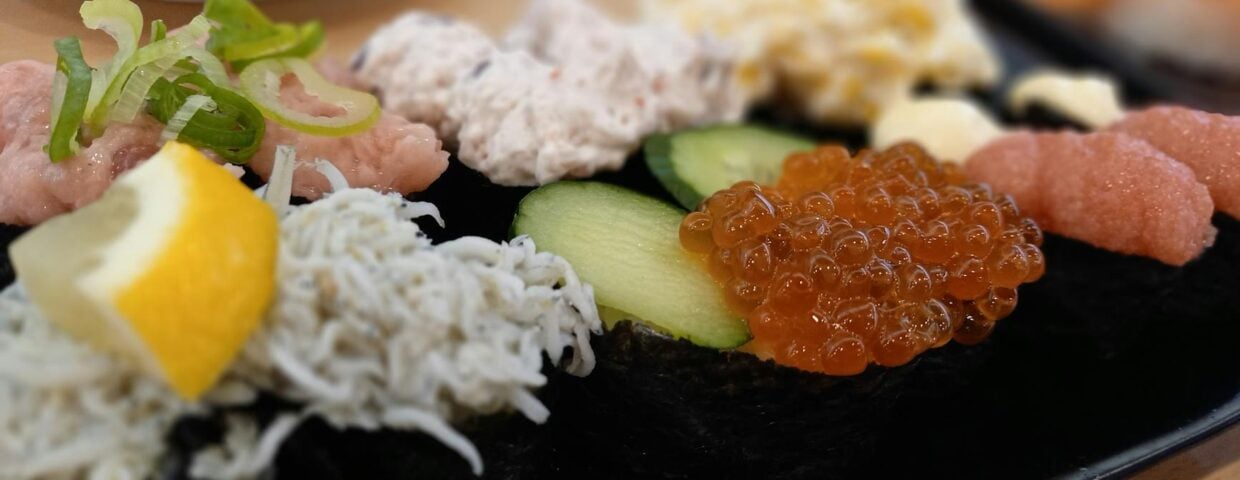
Kaiten sushi — the revolving conveyor belt format — is where most Japanese people eat sushi most of the time. It’s not the budget option that gets used when the good place is full. It’s just how sushi works for weekday lunches and family dinners.
The major chains — Sushiro, Kura Sushi, Hamazushi, Hama Sushi — operate at a national scale with central sourcing and quality that’s consistently higher than most mid-range sushi restaurants outside Japan. A plate of two pieces costs ¥110–330 depending on the chain and the fish. A satisfying lunch for two costs ¥2,000–4,000.
The format: you take a number at the entrance (or check in via app), wait to be seated, and then choose from the conveyor or order directly via the touchscreen tablet at your table. The tablet orders come out quickly from the kitchen on a dedicated express lane rather than the main belt. Most major chains have English and other language options on the tablet.
What to order:
- Maguro (tuna): The benchmark. At a good kaiten chain, the chutoro (medium-fatty tuna) in season is genuinely excellent.
- Salmon (sake): The most universally safe choice and consistently good.
- Scallop (hotate): Often underrated. Sweet, firm, and clean.
- Tamagoyaki: The sweet rolled egg. At a good shop it tells you something about the kitchen.
- Ebi (prawn): Ubiquitous. Order the ama-ebi (sweet raw prawn) if available — completely different from cooked prawn.
Skip anything described as “special sauce” or covered in something that would hide the fish.
Standing Sushi Bars
Between kaiten and omakase sits a category that doesn’t get enough attention: the standing sushi bar (tachinomi sushi or tachigui sushi). These are small counter bars, often in covered shopping arcades or station buildings, where you stand and eat a few pieces of very good sushi for ¥500–1,500.
The sushi is made to order in front of you. You point at the fish in the display case, the chef makes it, you eat it immediately. No waiting for a table. No booking required. The freshness is exceptional because turnover is constant.
Tsukiji Outer Market in Tokyo (the public market that remained after the inner market moved to Toyosu) has a high concentration of these. So does the Kuromon Ichiba market in Osaka. They’re not romantic, they’re not Instagram-friendly, and the fish is some of the best you’ll eat.
Omakase: The Full Experience
Omakase means “I leave it to you.” At a sushi omakase restaurant, you sit at the chef’s counter and eat whatever they decide to serve you, in whatever order, at whatever pace. You have no menu. You make no choices beyond your dietary restrictions (communicate these in advance).
This is the format that people travel to Japan specifically to experience, and the reason is that a great sushi chef operating at full expression is doing something that requires decades of training, intimate knowledge of what fish is best on any given day, and a precision with rice temperature and seasoning that sounds like obsession because it is.
What to know before booking:
Reservation: Most good omakase counters require advance booking, sometimes weeks. Tableall, Omakase, and the restaurant’s own site are the main booking channels. Some of the most celebrated shops — like Saito in Tokyo, consistently ranked among the best sushi restaurants in the world — require introductions from existing customers.
Price: Omakase sushi in Tokyo ranges from ¥10,000 (entry-level, still excellent) to ¥50,000+ for the most celebrated counters. Lunch omakase at the same restaurant is typically 30–40% cheaper than dinner.
Duration: One to two hours is standard. Twenty to twenty-five courses is typical. You eat at the chef’s pace.
What to do: Watch the chef. Eat each piece within thirty seconds of it being placed in front of you — sushi deteriorates quickly. Use your hands or chopsticks (both are correct). Don’t ask for extra wasabi or additional soy sauce unless you want to signal that you don’t trust the chef’s seasoning.
Sake: A good omakase restaurant will have a curated sake selection. If you drink, let them pair. If you don’t know sake, say so and ask for their recommendation.
Sushi Etiquette: What Actually Matters
Sushi etiquette — like all Japanese food culture — has accumulated a mythology online that’s disproportionate to the actual rules. Most of what you’ve read is either overblown or wrong.
Hands or chopsticks: Both are correct. At a traditional omakase counter, hands are historically correct. At kaiten sushi, chopsticks are standard. Either is fine anywhere.
Soy sauce: Dip the fish side down, not the rice. This is practical — it keeps the rice from absorbing too much soy and falling apart. At an omakase counter, the chef will have already seasoned each piece and may not provide soy sauce for certain items.
Wasabi: At a counter, wasabi is applied between the fish and rice by the chef. At kaiten sushi, individual wasabi packets are available. Adding wasabi on top of omakase-prepared sushi is unusual and unnecessary.
Ginger: It’s a palate cleanser between different fish, not a topping.
Tipping: Not customary in Japan. The price on the menu is the price.
The one thing that actually matters: eat each piece when it’s placed in front of you. Sushi at the right temperature, made thirty seconds ago, is what you’re there for.
Fish Seasonality
Sushi in Japan changes with the seasons in a way that doesn’t happen outside Japan, because the sourcing is close enough to the source for seasonality to matter.
The general principle: fish fat content peaks in winter when fish build up insulation for cold water. Tuna (maguro) and yellowtail (hamachi) in December and January are at their best — richer, smoother, more flavourful than the same fish in August. Summer brings different highlights: young squid (shin-ika), sea urchin (uni) at peak, conger eel (anago) at its largest.
If you’re visiting Japan in January and not eating tuna, you’re visiting during the tuna’s finest month and missing it.
Where to Eat Sushi in Japan
Tokyo: The highest concentration of excellent sushi at every price point. Toyosu Market area for fresh-from-the-market options. Ginza and Minami-Aoyama for high-end omakase. Shimokitazawa and Nakameguro for neighbourhood counter options at less aggressive prices.
Osaka: Not primarily a sushi city (it’s an izakaya and street food city), but the Kuromon Ichiba market has excellent standing sushi bars and the Osaka food scene rewards exploration. Osaka sushi historically used pressed sushi (oshi-zushi) rather than the Edo-mae style — worth seeking out as a regional distinction.
Kanazawa: Often overlooked by first-time visitors, Kanazawa on the Japan Sea coast is arguably the best city in Japan for seafood sushi outside Tokyo. The Omicho Market is one of the best fish markets in the country.
Kyoto: Not a sushi stronghold — it’s landlocked — but has good counter sushi restaurants. The regional style tends toward Kyoto-style preparations (marinated, pressed) rather than raw.
What Sushi Costs in Japan
| Format | Price per person | What you get |
|——–|—————–|————–|
| Kaiten (chain) | ¥1,000–3,000 | 8–15 pieces, good quality fish |
| Standing bar | ¥500–1,500 | 3–6 pieces, made to order |
| Mid-range counter | ¥3,000–8,000 | Full meal, standard omakase |
| High-end omakase | ¥15,000–50,000+ | 20+ courses, the full experience |
The gap between kaiten and high-end omakase is real but the kaiten quality in Japan is high enough that it’s not a consolation prize. Start with Sushiro or Kura Sushi, understand what good fish tastes like at ¥110 a plate, then scale up.
Sushi is one piece of what makes eating in Japan extraordinary. For the full picture — ramen, izakayas, street food, what to eat when you have no idea what you’re doing — start with the Japan Food Guide.
External reference: Toyosu Market visitor information — the main Tokyo wholesale fish market, open to the public for tours and with a ring of sushi restaurants on the upper floors.