What is an izakaya — and how do you order?
An izakaya (居酒屋) is a casual Japanese pub-restaurant: a place for drinks, small shared dishes, and conversation. It is an after-work social institution rather than a quiet cocktail bar or a restaurant built around one plated entrée. The word is commonly pronounced ee-zah-KAH-yah. For more context, start with our Japan Culture hub.
Order-flow TL;DR:
- Walk in: say sumimasen or wait for irasshaimase; give your party size and smoking preference.
- Expect otoshi/tsukidashi: a small appetizer and table charge of about ¥300–¥500 per person, already customary at many izakaya.
- Start with drinks: try toriaezu biiru (first, beer) or a soft drink, then order food in shared rounds.
- Pour thoughtfully: pour for others rather than filling your own glass; call staff with sumimasen or use the call button.
- Pay at the table: ask for okaikei; an even warikan split is normal in groups.
What is an izakaya?
The izakaya (居酒, literally “stay-sake-shop”) developed from sake shops that let customers drink on-site. Today it ranges from a dependable chain to a tiny neighborhood room, but the format stays recognizable: drinks set the pace, food arrives in small dishes, and everyone shares over the course of an evening.
- Small dishes are ordered in rounds and shared across the table.
- Food is as important as drink, but it is not usually served as one course for each person.
- The mood is informal and tables may be occupied for hours.
- Menus are often seasonal, handwritten, or displayed on a board.
That is the useful difference between an izakaya and a bar: you go for both food and drink. It is also different from a formal restaurant, where a meal may follow a more fixed sequence. Izakaya in Japanese is simply 居屋; there is no separate English category that captures every style.
Types of izakaya
Chain izakaya
Large chains offer a reliable, affordable introduction, with menus that may include tablet ordering and multiple languages. A typical chain experience is about ¥3,000¥5,000 per person for food and drinks, as on the existing menus and bands. Chains can also be practical for solo diners.
Neighborhood izakaya
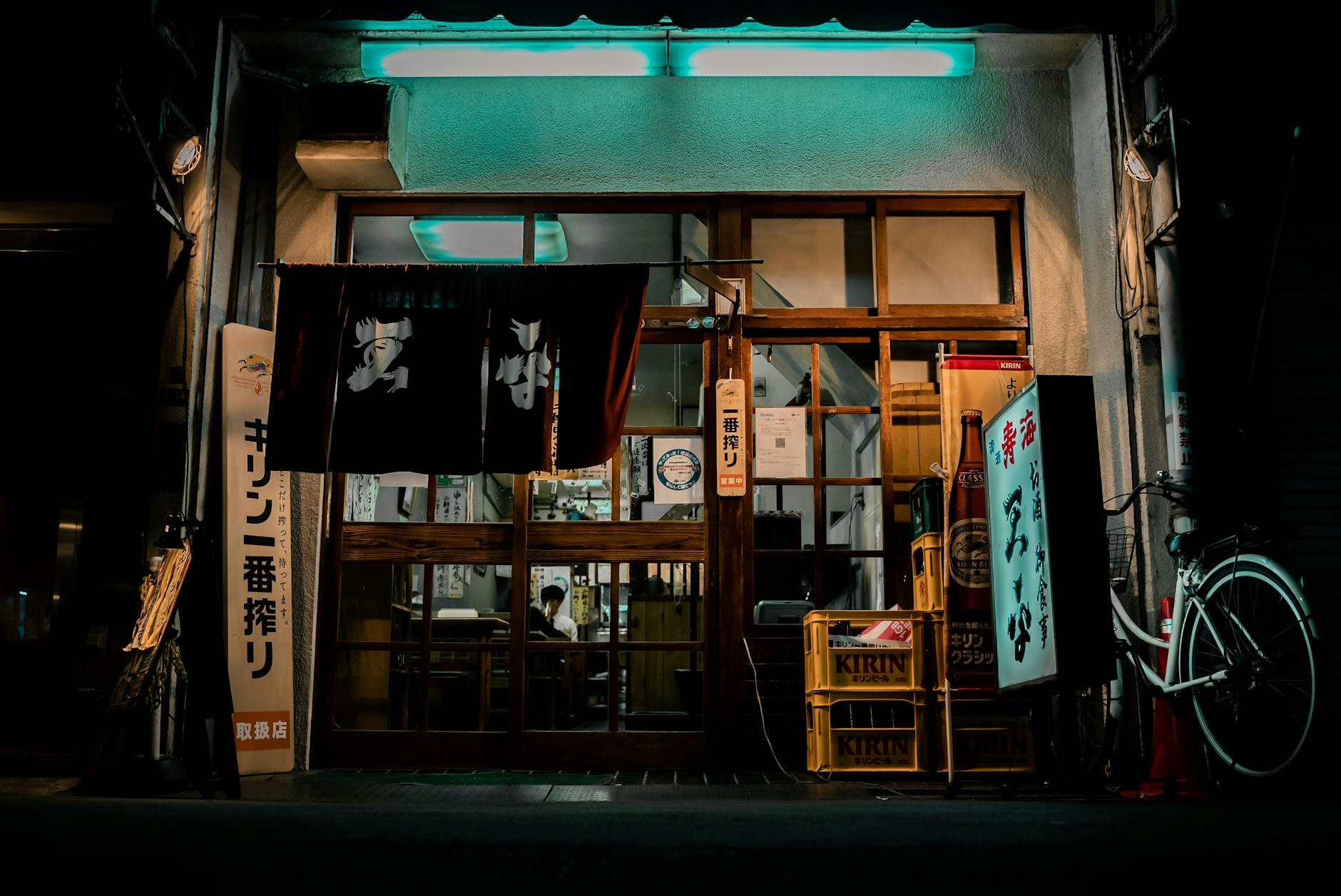
Small owner-operated places turn up in covered shopping arcades, back streets, and alleys near stations. English may be limited and the menu may be handwritten, but the room often has a strong regulars’ culture. Pointing at a dish or using a translation app is fine.
Yakitori-ya
A yakitori-ya specializes in grilled chicken skewers and is a focused subset of izakaya. Counter seating lets you watch the chef grill over charcoal. Order a few skewers, choose shio (salt) or tare (sweet soy glaze), and let them arrive at an easy pace.
Robatayaki and tachinomi
Robatayaki grills seafood and vegetables over an open hearth; it is often higher-priced, around ¥5,000–¥10,000+ per person. Tachinomi are standing bars near stations, where beer from ¥300 and quick shared dishes make for a lively, condensed version of izakaya culture.
How to order at an izakaya
At the entrance, say sumimasen if nobody greets you. Staff may ask nan-mei sama desu ka (how many people?) and about smoking: kinen means non-smoking and kitsuensha means smoking. You will usually receive an oshibori, a wet towel, and a menu.
An otoshi or tsukidashi may arrive before your order. It is a small appetizer connected to the seating charge, normally about ¥300–¥500 per person. It appears automatically on the bill, so it is a standard part of the format rather than a mistake or a tourist trap.
Drinks first
The first order is normally drinks. Toriaezu biiru means “first, beer,” but you can choose whatever suits you. Common options include nama biiru (draft beer), chu-hai, a whisky highball, sake (nihonshu), shochu, oolong-hai, and soft drinks. There is no stigma in choosing not to drink alcohol.
Food in shared rounds
Start with a few dishes, then order more as you go. Plates arrive when ready, not necessarily in a set sequence. Share them rather than treating every item as one person’s entrée. If you are unsure, ask for recommendations or point to a menu photo.
Pouring and calling staff
In a group, it is considerate to pour for others and let someone else refill your glass instead of filling your own. This is a social custom, not a rule you must perform perfectly. Say sumimasen clearly when you need staff; a call button, common at chains, is also normal. Do not snap your fingers.
Solo dining is easy at an izakaya. Counter seats are standard, and a guest on their own can order a drink and a few dishes without needing to join a group.
What is izakaya food? Essential dishes to order
Izakaya food means small, shareable dishes ordered in rounds rather than a single plated meal. A useful first order might combine something fresh, something grilled, and something fried:
- Edamame: boiled salted soybeans and an easy opening dish.
- Karaage: Japanese fried chicken, often marinated with soy and ginger, served with lemon.
- Yakitori: skewers ranging from thigh and leek to tsukune, skin, liver, heart, or cartilage; choose salt or tare.
- Sashimi moriawase: assorted raw fish, with quality varying by restaurant.
- Tamagoyaki: a sweet rolled omelette that makes a good starter.
- Tofu: agedashi tofu or cold hiyayakko for a lighter plate.
- Gyoza: pan-fried dumplings with soy sauce, vinegar, and chili oil.
- Nabe: a shared hotpot, especially common in winter; some places require advance ordering.
- Shime: a closing dish such as ochazuke, ramen, onigiri, or rice. It is customary, not mandatory.
If you have coeliac disease or a gluten intolerance, soy sauce, tare, karaage, and gyoza need checking. Our gluten-free Japan guide has the phrases and practical detail; this page is not a substitute for that advice.
The bill, practical details, and cities
Ask for the bill with okaikei onegaishimasu, or make the familiar writing-on-the-palm gesture. Bills are usually brought to the table. Groups often split evenly with warikan; ask at the start if you need separate bills with betsubetsu de onegaishimasu.
- Hours: many open around 17:00–18:00 and close at midnight or later; check the individual restaurant.
- Cost: a mid-range izakaya is roughly ¥2,500–¥4,000 per person all-in; chains often run ¥3,000–5,000 and robatayaki can be higher.
- Reservations: usually unnecessary at chains but useful for popular independent places, especially Friday and Saturday evenings.
- English: chains and tourist areas are more likely to have English menus; neighborhood places may not.
Osaka is known for its food-focused, lively atmosphere; Fukuoka’s yatai offer a distinctive outdoor version; Tokyo has dense station-area choices; and Kyoto combines seasonal cooking with sake culture. These are atmosphere pointers, not a ranked list of “best” venues.
For broader context, see our Japan Food hub, Japan food guide, and Japanese food culture guide.
Frequently asked questions
What is an izakaya?
An izakaya is a casual Japanese pub-restaurant where people share small dishes and drinks over an evening. It is part of everyday after-work social culture, with formats ranging from chains to tiny neighborhood rooms.
What is izakaya food?
Izakaya food is a selection of small dishes ordered in rounds: edamame, yakitori, karaage, sashimi, gyoza, tofu, hotpot, and a possible rice or noodle shime. It is meant to be shared, not served as one entrée per person.
How do you order at an izakaya?
Order drinks first, then a few dishes to share. Keep ordering as you go, pour for others when appropriate, and say sumimasen when you need staff. Use the call button if there is one.
What is otoshi or the table charge?
Otoshi, also called tsukidashi, is a small appetizer associated with a seating charge of about ¥300–¥500 per person. It arrives automatically at many izakaya and is a normal part of the format, not a tourist trap.
Can you go to an izakaya alone?
Yes. Counter seats are common, and solo guests can order a drink and a few dishes. Staff generally serve you normally while leaving you to enjoy the meal.
How much does an izakaya cost?
Use roughly 2,500–¥4,000 per person all-in for a mid-range izakaya, with chains often around ¥3,000¥5,000 and robatayaki around ¥5,000–¥10,000+ per person. These are the existing broad bands, not a quote for a particular restaurant.