Walk into an izakaya after work in Osaka and you’ll hear a dozen conversations at once — colleagues venting, laughing, pouring each other drinks before pouring their own. Watch a woman in yukata step carefully across a stone path at a Kyoto shrine, phone in hand, careful not to step on the edges of the stones. Stand at the edge of a sumo tournament, where the referee’s outfit hasn’t changed in centuries and the wrestlers perform the same purification rituals they did in the Edo period.
This is Japanese culture — not as a museum exhibit, but as something people actually live. Layered, contradictory, deeply particular, and constantly evolving. It doesn’t sit still long enough to be fully summarised, which is exactly what makes it worth understanding properly.
This guide covers the major threads of Japanese culture and traditions: the arts, the festivals, the food customs, the etiquette that shapes everyday interactions, and the experiences that give visitors a real foothold in understanding how Japan thinks and moves.
The Philosophy Behind Japanese Culture
Before diving into specific traditions, it helps to understand the values that run underneath all of them. Japanese culture is shaped by a handful of concepts that recur across everything — aesthetics, food, social behaviour, even how space is organised.
Ma (間) — the conscious use of empty space or pause. In music, architecture, conversation, and visual art, what’s left out is as intentional as what’s included. A tea room with bare walls. A pause before answering. Negative space in a garden arrangement.
Wabi-sabi — the acceptance of imperfection and impermanence. Cracked pottery repaired with gold (kintsugi). A garden where moss grows unevenly. An asymmetrical bowl that fits the hand better for it. This isn’t an aesthetic accident — it’s a philosophy.
Omotenashi — hospitality that anticipates needs before they’re expressed. Not service with a transaction in mind, but genuine care. You see it in how hotels prepare your room, how restaurants explain each dish, how a convenience store clerk double-bags your cold items so condensation doesn’t reach the other products.
Seken (世間) — awareness of the social world and one’s place in it. The concept explains why Japanese social behaviour often prioritises group harmony over individual expression — not from submission, but from a genuinely different relationship to community.
These aren’t abstract ideas. They show up in everything covered below.
The Tea Ceremony
If there’s one Japanese tradition that encapsulates everything at once — philosophy, aesthetics, hospitality, ritual, and presence — it’s the tea ceremony (chado, 茶道). The “way of tea” is not a performance. It’s a practice, rooted in Zen Buddhism, that treats the preparation and drinking of matcha as a meditation in itself.
Sen no Rikyu, the 16th-century tea master who shaped the modern ceremony, established the four principles still used today: harmony (wa), respect (kei), purity (sei), and tranquillity (jaku). Every element of the ceremony — the selection of the tea bowl, the arrangement of the tatami room, the angle of the scroll in the alcove, the choice of seasonal sweet — reflects these principles.
For visitors, tea ceremony experiences range from the highly formal (multi-hour events with full kaiseki meals) to accessible 30-minute tastings in Kyoto’s tourist districts. Kyoto and Uji — Japan’s matcha heartland — are the best places to experience it. But even a simplified experience is worth approaching with proper attention.
→ Full guide: Tea Ceremony in Japan — What to Expect, Where to Go
Japanese Festivals (Matsuri)
Japan runs on festivals. There are over 300,000 festivals held annually across the country — local shrine celebrations, national Buddhist events, seasonal markers, and community gatherings that have been running for centuries. The scale ranges from village rituals attended by dozens to events like Gion Matsuri in Kyoto that draw over a million people.
The major festival categories:
- Shinto matsuri — shrine festivals involving portable shrines (mikoshi), music, and communal offering
- Buddhist observances — Obon, the summer festival honoring ancestors, is the largest
- Seasonal celebrations — hanami (cherry blossom viewing), momijigari (autumn leaf viewing), yukimi (snow viewing)
- Fire festivals — including Nachi no Hi Matsuri and Kurama no Hi Matsuri
The rhythm of the Japanese year is shaped by festivals. Understanding them is understanding how Japan moves through time.
→ Full guide: Japanese Festivals — The Complete Calendar
Obon Festival
Obon is Japan’s most culturally significant mid-summer event — a three-day Buddhist festival (typically August 13–15) when the spirits of ancestors are believed to return to the living world. Families travel home, graves are cleaned, and communities gather for Bon Odori — circular folk dances performed in temple and shrine courtyards across the country.
The regional variation is remarkable. In Kyoto, the Gozan no Okuribi — enormous bonfires lit on five mountains — send the spirits back at the festival’s end. In Tokushima, Awa Odori has its own music and distinctive dance style. In Okinawa, the timing and rituals differ from the mainland entirely. There is no single “Obon experience” — it’s a thread that runs through every community in its own way.
→ Full guide: Obon Festival Japan — What It Is and How to Experience It
Hanami — Flower Viewing Culture
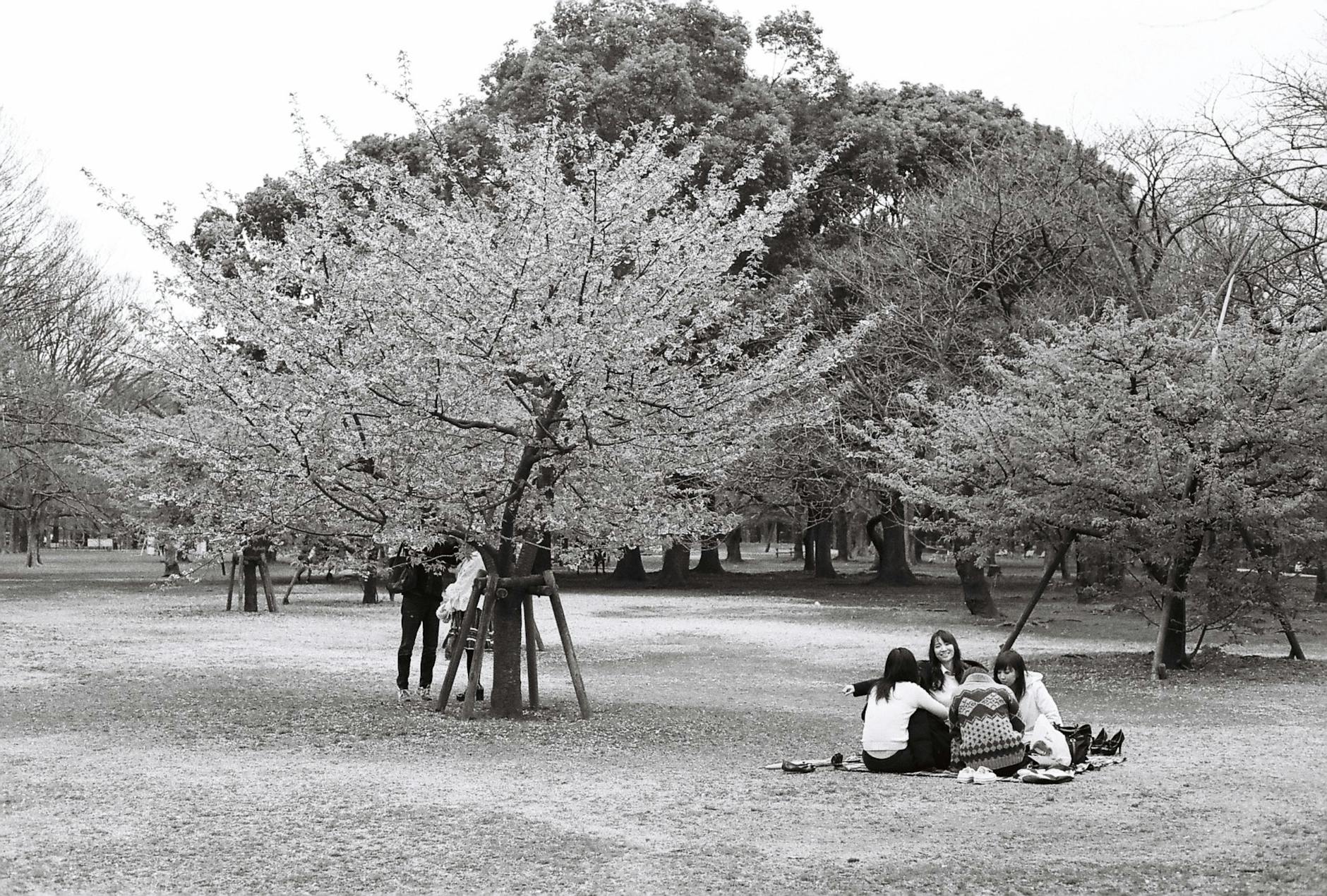
Cherry blossom season is Japan’s most internationally recognised cultural event — and the one that foreigners most frequently misunderstand. Hanami (花見, flower viewing) isn’t simply admiring flowers. It’s a particular kind of communal gathering: friends and families spread tarps under the trees, share food and drink, and mark the fleeting nature of beauty together.
The concept draws directly on mono no aware — the gentle sadness of impermanence — and has been practised since at least the 8th century. The sakura’s bloom lasts roughly one to two weeks. Its brevity is the point.
Modern hanami can be intensely social — Tokyo’s Yoyogi Park fills to capacity with groups who reserve spots from early morning. But quieter hanami along lesser-known riverbanks or castle grounds carry the same spirit at a fraction of the crowd.
→ Full guide: Hanami Japan — Best Parks, Timing, and What to Know
Japanese Food Culture
Japanese cuisine is UNESCO-recognised (washoku was added to the Intangible Cultural Heritage list in 2013), but the designation captures only part of it. Food in Japan is inseparable from culture — how and where you eat is as significant as what you eat.
The rules are specific. Ramen shops are often solitary, eyes-forward experiences — the bar seating and absent conversation is intentional, not antisocial. Sushi omakase is a relationship between chef and guest, built on trust and seasonal selection. Izakayas are communal by design — food ordered in rounds, shared across the table, paced around conversation.
Food culture also maps regional identity with unusual precision. Osaka is kuidaore — “eat until you drop.” Kyoto cuisine (kaiseki) is about restraint and aesthetics. Fukuoka has its own ramen style, its own mentaiko culture, its own late-night yatai stall scene that doesn’t exist anywhere else in Japan.
→ Full guide: Japanese Food Culture — What Eating in Japan Actually Means
Izakaya Culture
The izakaya (居酒屋) is Japan’s version of the pub — but the comparison doesn’t fully hold. It’s a sit-down drinking establishment where food is as important as the drinks, where the concept of nomi-kai (drinking gathering) is a genuine social institution, and where the atmosphere of a good izakaya can’t be replicated outside Japan.
Walking into a good izakaya solo or with a group requires knowing the unspoken rules: how to order (drinks first, food in rounds), how to pour (never your own), what oshibori is for, why they bring the wrong change on purpose sometimes. None of it is inaccessible — but understanding it makes the experience vastly better.
→ Full guide: Izakaya in Japan — How to Order, What to Eat, What to Know
Sumo Wrestling
Sumo (相撲) is Japan’s national sport in the truest sense — not just a sport, but a Shinto ritual. The dohyo (raised clay ring) is purified before each tournament. The yokozuna (grand champion) performs a ring-entering ceremony (dohyo-iri) rooted in sacred ritual. Even the roof hanging above the ring is modelled on a Shinto shrine.
Six honbasho (grand tournaments) are held each year — January, March, May, July, September, and November — each running 15 days. Tokyo’s Ryogoku Kokugikan hosts three of them. Attending in person is one of Japan’s great cultural experiences: the ritual, the pageantry, the impossibly fast bouts, the way the audience responds to each match.
→ Full guide: Sumo Wrestling Japan — Tickets, Rules, and What to Expect
Onsen Etiquette
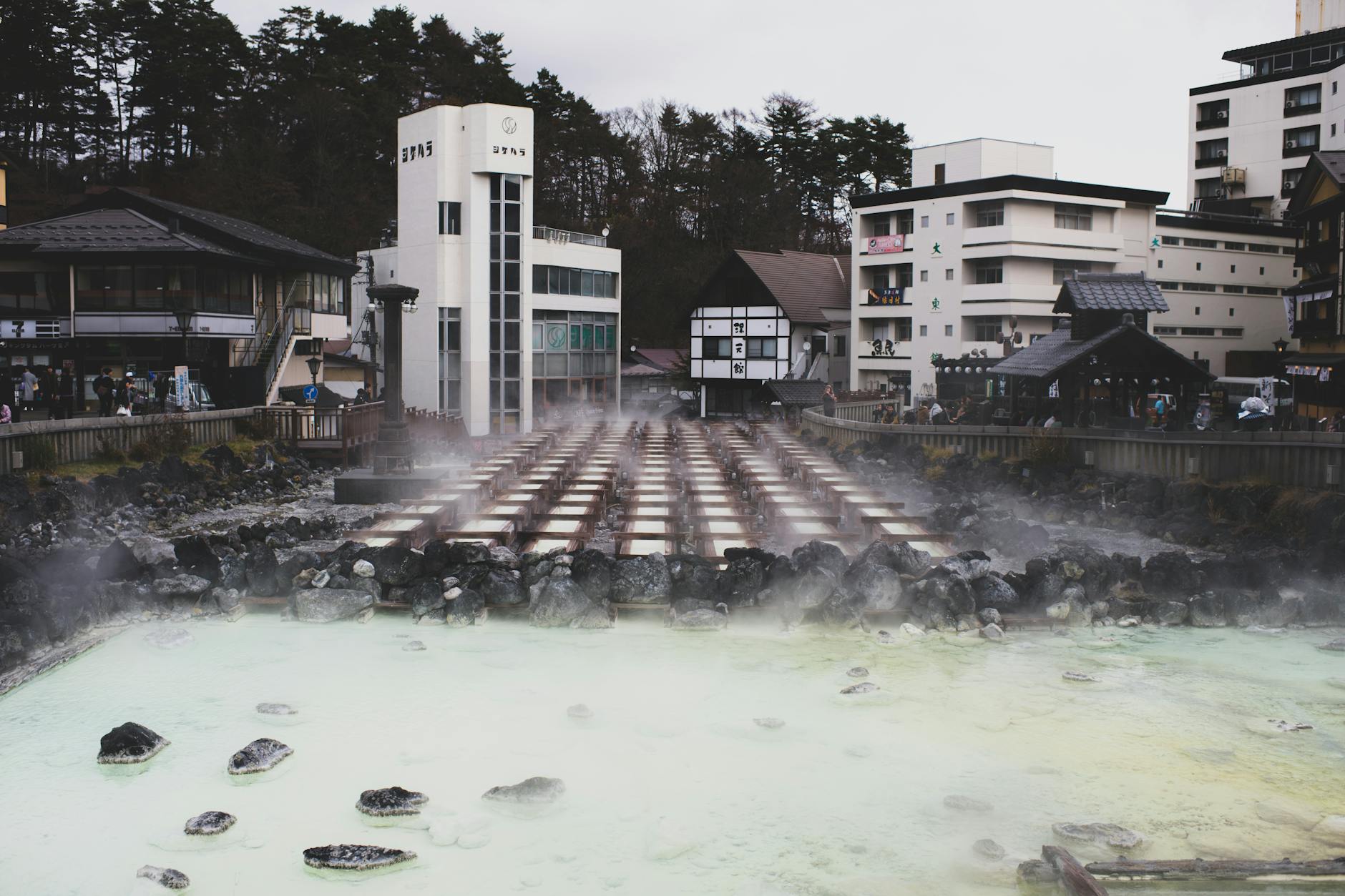
Japan has over 27,000 natural hot spring (onsen) sources — more than any other country in the world. Bathing culture is deeply embedded in daily life, and the onsen experience is one of the most talked-about things visitors want to try. It’s also one of the most misunderstood.
The rules are specific and non-negotiable: wash thoroughly before entering the bath, no swimwear (you enter naked), no towels in the water, keep your voice down, don’t splash. The tattoo policy varies by establishment but remains a real barrier at many traditional onsen. Navigating all of this correctly makes the difference between a transformative experience and an uncomfortable one.
→ Full guide: Onsen Etiquette in Japan — Rules, Tattoos, and What to Expect
Japanese Work Culture
Japan’s work culture is one of the most discussed — and misunderstood — aspects of modern Japanese life. Concepts like karoshi (death from overwork), salaryman culture, and the rigid corporate hierarchy are real. So is the evolution happening around them, as Japan faces a labour shortage and younger generations push back on inherited norms.
Understanding Japanese work culture is essential context for anyone planning to live or work in Japan, and illuminating for anyone trying to understand how the country’s social structures function.
→ Full guide: Japan Work Culture — The Reality Behind the Stereotypes
Social Etiquette and Daily Life
Much of Japanese social etiquette isn’t written down anywhere. It’s absorbed — through observation, correction, and years of participation. For visitors and newcomers, the learning curve is real but rarely punishing. Japanese people are generally forgiving of foreigner missteps, especially when the effort to understand is visible.
The key areas to understand:
- Shoes — removed at the entrance to homes, traditional restaurants, ryokan, many temples. The division between outdoor and indoor space is taken seriously.
- Queuing — orderly, patient, respected. Cutting a queue is genuinely shocking behaviour.
- Silence in transit — train cars are quiet by social consensus. Phone calls on trains are avoided. This isn’t a law, it’s just the norm.
- Oshibori — the hot or cold towel given at restaurants is for your hands, not your face. (Many people use it for their face. This is technically wrong. Nobody will say anything.)
- Business cards (meishi) — received and given with both hands, examined briefly, placed on the table in front of you during a meeting. Never written on. Never shoved in a pocket.
None of this is prohibitively complicated — but knowing it makes every interaction land better.
Traditional Arts and Crafts
Japan’s traditional arts are living practices, not museum pieces. Ikebana (flower arranging), kodo (incense ceremony), nihonga (Japanese-style painting), pottery traditions like Bizen, Hagi, and Karatsu ware — these continue to be practised, taught, and sold. The Agency for Cultural Affairs designates over 150 “Important Intangible Cultural Properties” that are actively preserved through master-apprentice transmission.
Traditional performing arts include:
- Noh — slow, masked theatrical tradition dating to the 14th century
- Kabuki — stylised drama with elaborate costume and makeup, accessible to visitors via headset guides
- Rakugo — solo storytelling performed seated with minimal props; deeply rooted in Edo-period commoner culture
- Taiko — traditional drumming with roots in both Shinto ritual and military communication
Kyoto, Tokyo (particularly the Asakusa and Shinjuku areas), and Kanazawa offer the most accessible entry points into traditional arts for visitors.
Religion in Everyday Life
Japan has two major religious traditions — Shinto and Buddhism — and most people engage with both without seeing this as contradictory. Shinto is about relationships with kami (spirits or forces) in the natural world. Buddhism addresses death, the afterlife, and human suffering. The two coexist, often within the same temple-shrine complex, in a way that baffles people from monotheistic traditions.
In practice: people visit Shinto shrines for new year blessings, births, and weddings. They use Buddhist temples for funerals and memorial rites. Many people would describe themselves as neither religious in the Western sense, yet still participate fully in both traditions. The JNTO’s guide to living in Japan has a useful overview of religious customs for newcomers.
Japan’s Culture in Practice
The best way to understand Japanese culture isn’t to read about it — it’s to show up and pay attention. Walk slowly through a covered shopping arcade (shotengai) in a provincial city. Stand quietly during a temple bell ringing. Watch a grandmother navigate a supermarket with the same focused precision she’d bring to a tea ceremony.
Japan rewards attention. The texture is in the details. This guide, and each of the cluster posts linked above, is an attempt to give you enough context to notice them.
For practical planning, see our Japan travel guide — it covers timing, transport, visas, and how to structure your trip around the experiences that matter most to you.
And if you’re thinking about living in Japan rather than visiting, the guide to living in Japan as a foreigner covers what the day-to-day actually looks like when the culture becomes your own.