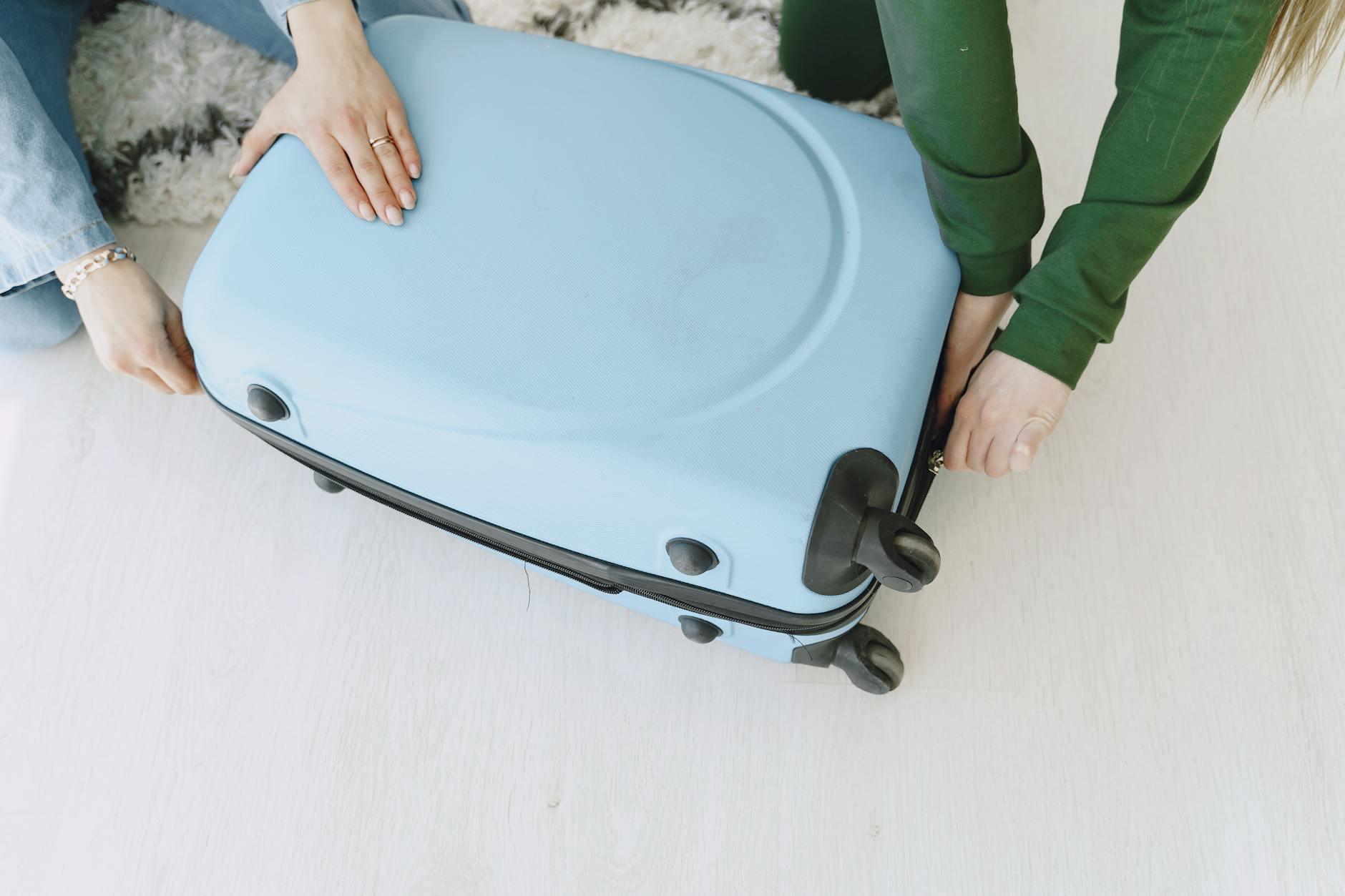
Packing for Japan well means packing less than you think and thinking more carefully about footwear. Everything else — toiletries, umbrellas, chargers, most medications — is available in Japan at reasonable prices. The things to think about are the Japan-specific ones: shoes you can slip on and off, cash, a transport card, and if you’re visiting in summer, a strategy for the heat.
Here’s the honest list by season, plus the things worth knowing before you arrive.
Before the List: Japan Packing Principles
- Pack light: Japan’s luggage forwarding service (takuhaibin) allows you to send bags between hotels or to the airport at low cost. Most people overpack for Japan and regret it after the first day of climbing stairs at train stations.
- Shoes matter most: You’ll walk 15,000–25,000 steps per day and remove your shoes repeatedly at temples, some restaurants, and ryokan. Slip-on shoes that look reasonable are the ideal. Good walking shoes with no slip-on ability are second choice. Fashion shoes that aren’t broken in are a mistake.
- Buy toiletries in Japan: Japanese drugstores (Matsumoto Kiyoshi, Sundrug, etc.) are excellent, comprehensive, and affordable. Don’t waste luggage space on shampoo, sunscreen, or skincare that you can buy cheaply on arrival.
- Japan’s clothing sizes run smaller: If you’re tall or have large feet (above UK 10/EU 44/US 11 for men; UK 8/EU 42 for women), bring enough clothing for your whole trip. Finding larger sizes in Japan is possible but requires searching.
What to Pack by Season
Spring (March–May)
Spring is Japan’s busiest tourist season. Weather starts cold in March and warms through May — layering is essential because temperatures can vary 15°C between a cold morning and warm afternoon.
Clothing:
- Light to mid-weight jacket (waterproof useful — spring has showers)
- Sweaters or mid-layers for evenings (March still cold — 7–12°C evenings in Tokyo)
- T-shirts and light shirts for warmer days (especially April–May)
- Comfortable walking trousers or jeans
- 1 dressier outfit if you’re planning nicer restaurants or evening events
Footwear:
- Primary: comfortable walking shoes you can wear all day — well broken-in
- If slip-on: clean, presentable slip-ons for temple visits (you’ll be doing a lot of shoe removal)
Cherry blossom season note: It can rain during bloom season and temperatures vary. Bring a compact umbrella or buy one immediately on arrival (¥500–1,000 at any convenience store — excellent quality).
Summer (June–August)
Japan in summer is hot and humid — more so than many Western visitors anticipate. Tokyo in August averages 31°C with 70%+ humidity. Packing for comfort and heat management is the priority.
Clothing:
- Light, breathable fabrics — linen and moisture-wicking synthetics outperform cotton in Japan’s humidity
- Short sleeves primarily; one light long-sleeve layer for air-conditioned interiors (Japanese A/C can be aggressive)
- Light trousers or walking shorts — avoid jeans, which become miserable in humidity
- Rain jacket or compact umbrella for frequent showers and rainy season (June)
Summer essentials:
- Portable fan: Small handheld fans (¥300 at 100-yen shops, or ¥1,500–3,000 for battery-powered USB fans) are widely used — a reasonable purchase on arrival
- Cooling towels: Available at any sports shop or Amazon Japan for ¥500–1,500
- Sunscreen: Japanese sunscreen is excellent (very high SPF, light formulation) — bring your own if you have a preference, or buy on arrival
- Electrolyte drinks: Convenience stores stock these — essential if you’re outside for long periods
Rainy season (June) note: June is Japan’s rainy season — pack or buy a good compact umbrella. A waterproof day bag cover is worth having.
Autumn (September–November)
Autumn is often Japan’s best weather for travel — warm September, pleasant October, cool November. Packing is similar to spring with the addition of warmer layers as the season progresses.
Clothing:
- September: light summer clothing still appropriate (still warm)
- October: mid-layer jacket, trousers, T-shirts
- November: coat required for evenings, warm layers underneath (Kyoto evenings hit 10°C by late November)
- Scarf for late October–November evenings
Typhoon season note (September): September carries typhoon risk. A compact waterproof jacket and sturdy umbrella are practical. Typhoons usually pass quickly but can disrupt one or two days of travel.
Winter (December–February)
Genuinely cold in most of Japan — Tokyo averages 5–9°C in January. Hokkaido is full winter. Pack for it properly, but also know that indoor spaces (shops, trains, restaurants) are well-heated — layering matters more than one heavy coat.
Clothing:
- Proper winter coat (down jacket works well — lightweight and packable)
- Thermal base layers (merino wool is excellent — odour-resistant, warm, not bulky)
- Warm sweaters or mid-layers
- Scarf, gloves, hat (can buy cheaply in Japan if you forget)
- Warm walking boots or shoes with grip (Kyoto and Nara can have frost)
Hokkaido skiing: If you’re going skiing, don’t bring ski gear — Japan’s rental equipment is excellent and significantly cheaper than flying with ski bags. Bring your own ski helmet if you’re particular about fit.
Onsen note: If you’re visiting onsen (hot springs) — highly recommended in winter — bring a small cotton towel or buy one at the facility. Larger bath towels are usually provided at ryokan. Some onsen prohibit tattoos — bring a covering bandage or waterproof plaster if you have visible tattoos in a group setting.
Plan Your Japan Trip
For the full timing picture, the best time to visit Japan guide covers every month’s weather and crowds. For a day-by-day plan, the 2-week Japan itinerary covers the standard first-timer circuit. The Japan travel guide hub has everything else you need from visas to transport. For official packing guidance and seasonal tips, japan.travel has updated seasonal advice.
Universal Packing List (Every Season)
Documents
- Passport (valid for full trip + 6 months)
- Printed copies of all bookings (accommodation, flights, JR Pass reservation)
- Travel insurance documentation (print or have offline)
- Visa or printout of visa confirmation (if required for your nationality)
- Emergency contacts written on paper (not just on phone)
Money and Payments
- Cash: arrive with ¥30,000–50,000 minimum; exchange at the airport or use a 7-Eleven ATM on arrival
- Credit card (Visa or Mastercard — most widely accepted internationally-issued cards)
- Card that works at Japanese ATMs (check with your bank; N26, Wise, Charles Schwab are commonly recommended for low-fee international withdrawals)
Technology
- Pocket WiFi or SIM card: Essential. Pocket WiFi from airport rental counters (NINJA WiFi, Softbank) gives multiple devices data; local SIM (IIJmio, Rakuten) is cheaper if you only need one device. Decide before arrival.
- Power adapter: Japan uses Type A plugs (same as USA) at 100V. US and Canadian devices work directly. European, UK, and Australian devices need an adapter. Japan’s 100V voltage is compatible with most modern electronics (check the label — if it says “100-240V input” you’re fine).
- Portable battery bank: Charging on the go is important in Japan where you’ll be out all day. 10,000–20,000mAh is ideal.
- Download offline maps: Google Maps offline for Japan (download before arrival); also download Google Translate with Japanese offline language pack — the camera translation feature is invaluable for menus and signs.
Health and Medications
- Any prescription medications (sufficient for your full trip plus buffer); check Japan’s restricted medication list if you take opioids, stimulants, or some common Western medications — Japan has different rules
- Basic pain relief (acetaminophen/paracetamol or ibuprofen — available in Japan but in different formulations)
- Motion sickness medication if needed (long bus or boat trips)
- Antidiarrheal medication (food changes sometimes affect digestion on first trip)
- Blister prevention or treatment — you will walk more than usual
Medication import note: Some common Western medications are restricted in Japan. Pseudoephedrine (common in cold medicines like Sudafed), codeine, and certain ADHD medications have restrictions. Check the list at the Japanese Ministry of Health’s pharmaceutical import guidance before travel.
Day Bag Essentials
- Compact day bag or backpack (Japan’s walking pace makes a good bag essential)
- Reusable water bottle (filled from hotel or restaurant — tap water in Japan is safe to drink everywhere)
- Compact umbrella (or buy on arrival — ¥500 at any konbini)
- Small hand towel (tenugui) — Japanese public bathrooms often lack hand dryers or towels
What NOT to Pack (Available in Japan)
- Bulky toiletries — Japan’s drugstores are extensive
- Electrical adapters for most items (buy a cheap universal in Japan or airport if needed)
- Large umbrella — Japan’s convenience store compacts outperform most travel umbrellas
- Portable fans in summer — buy on arrival for ¥300–500
- Ski/snowboard rental gear — rent in Japan
- Too many guidebooks — offline Google Maps, Hyperdia (train planning), and Japan Official Travel App do the work
Luggage Forwarding: Japan’s Hidden Travel Hack
Japan’s takuhaibin (宅配便) courier service allows you to send luggage between hotels and to/from airports at low cost — typically ¥1,500–2,500 per large bag.
How to use it:
- Drop your bag at your current hotel’s front desk the evening before your travel day
- It arrives at your next hotel the following day
- From your final hotel to the airport: send the night before; it’s waiting at the airport terminal counter
- From airport to your first hotel: organise at the airport counter on arrival (arrives next day — stay one night in transit accommodation first)
This is how many Japanese travellers handle luggage on long trips. Yamato Transport (Kuroneko) is the most common service — all major hotels know the process.
Cultural Packing Notes
- Temple-appropriate clothing: Most Japanese temples and shrines don’t have dress codes like some religious sites in other countries — shorts and T-shirts are generally fine. Some Shinto ceremonies or specific sacred inner areas may require more modest dress — read signs and follow the context.
- Shoes off at temples: Anywhere you enter with tatami or wooden floors, shoes come off. This is why easy-to-remove shoes matter.
- Tattoos and onsen: Many onsen (hot spring baths) prohibit visible tattoos. Private baths (kashikiri onsen) are an option if you have visible tattoos. Some facilities now allow coverage with waterproof tape for smaller tattoos — check the specific venue’s policy.
The Bottom Line
Pack less than you think you need. Get shoes right. Buy toiletries when you arrive. Bring your prescriptions and check the restricted medication list. Have cash and a way to access more cash. That covers 90% of what matters. Japan is one of the easiest countries in the world to buy almost anything you forget — the 24/7 convenience stores and excellent drugstores are your backup. Enjoy the trip.