The Japanese convenience store — konbini (コンビニ) — is not really a convenience store in the Western sense. It’s closer to a combination of grocery store, café, pharmacy, bank, post office, travel agent, and community hub that happens to be open 24 hours a day. Learning to use them properly is genuinely one of the most useful things you can do in Japan, whether you’re visiting for a week or living here long-term.
The Main Chains
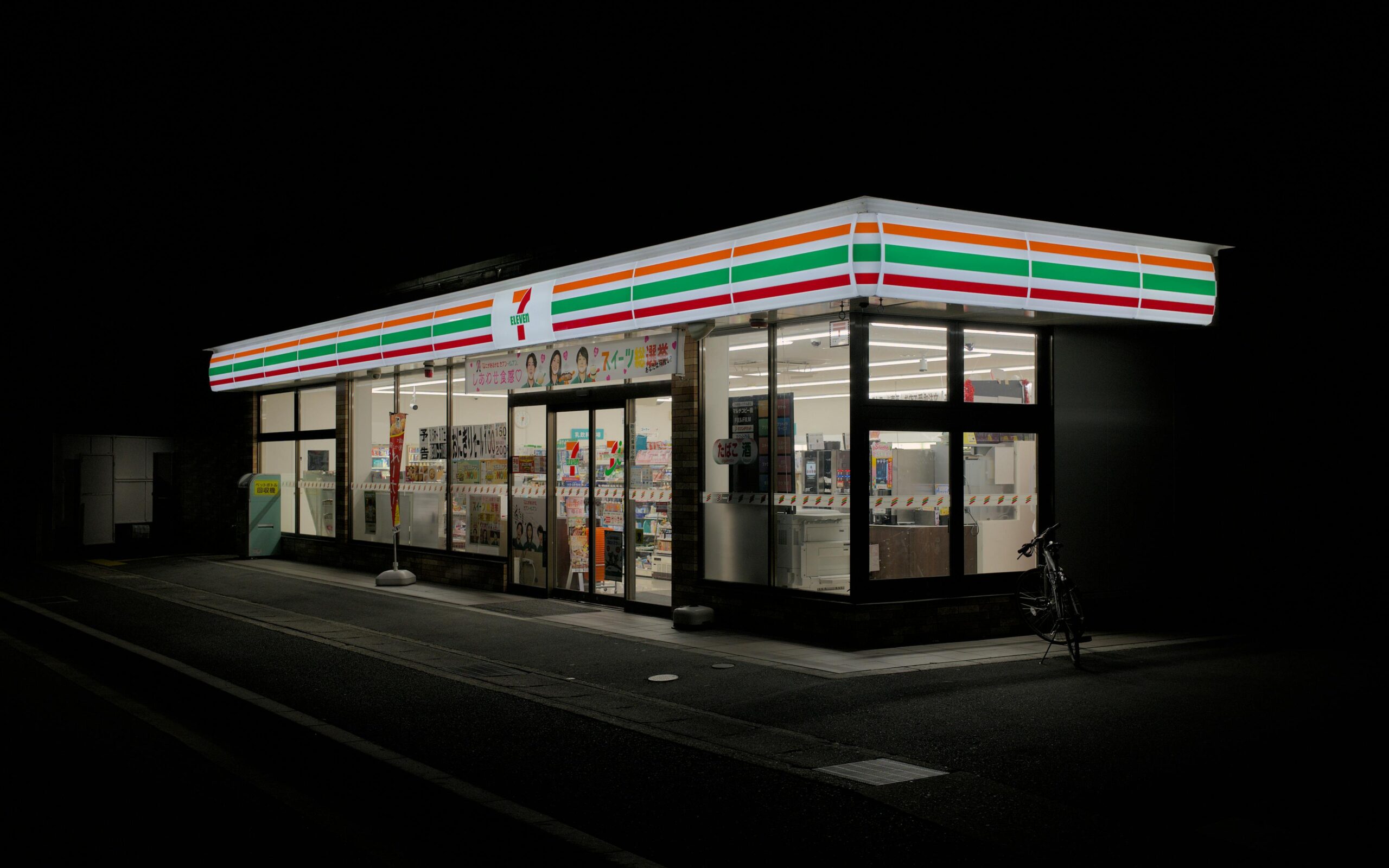
7-Eleven (セブン-イレブン)
Japan’s largest convenience store chain with over 21,000 locations nationally. 7-Eleven Japan is actually majority Japanese-owned and operates quite differently from its American counterpart — the food quality here is consistently higher, the product range is more curated, and the brand has earned genuine food reputation. 7-Eleven sandwiches, egg salad specifically, have a cult following. Their ATMs (7Bank) are the most internationally accessible for foreign cards — accept Visa, Mastercard, American Express, Cirrus, and others.
Lawson (ローソン)
About 14,000 locations. Known for creative limited-edition products and some of the best convenience store desserts — their mochi ice cream, cream puffs (Uchi Cafe line), and seasonal specials are consistently impressive. Lawson also operates Natural Lawson (health-focused product range) and Lawson 100 (¥100 price point items) in some areas.
FamilyMart (ファミリーマート)
About 16,000 locations. Famous for famichiki — fried chicken at the counter that has genuine fans across Japan. Strong ready-to-eat section and some locations have expanded seating areas. FamiPort machines (the in-store kiosk — more on this below) are particularly versatile. FamilyMart is particularly popular with students and young workers for its food variety.
Ministop (ミニストップ)
About 1,800 locations, concentrated in Kanto and Chubu. Part of the Aeon group. Known for soft serve ice cream made in-store — the seasonal soft serve flavours (matcha, sweet potato, strawberry) are frequently cited as Japan’s best convenience store ice cream. Less extensive than the big three but worth seeking out.
Daily Yamazaki / Yamazaki Daily Store
A smaller chain focused heavily on bread and baked goods (Yamazaki is one of Japan’s largest bread manufacturers). Found more in residential areas than tourist spots. The bread selection is excellent and often the freshest of any konbini.
Food at Japanese Convenience Stores
This is where Japan’s konbini genuinely earns its reputation. The food quality is a level above what most countries’ convenience stores offer.
Must-Try Items
- Onigiri (おにぎり): Rice balls wrapped in nori (seaweed), filled with tuna mayo, salmon, pickled plum, or cod roe. ¥100–180 each. The most quintessential Japanese quick meal. The pull-and-fold wrapper reveals the nori just before eating so it stays crisp.
- Nikuman (肉まん): Steamed buns filled with pork, available at the counter near the register in cold months. ¥110–150. Lawson and 7-Eleven both do excellent versions.
- Oden (おでん): A winter simmered dish — fish cakes, radish, tofu, eggs, konnyaku in clear broth. Available at the counter October–March, pay per item (¥50–120/item). Extremely cheap and warming in winter.
- Hot dogs and American dogs: Counter items, permanently available. The American dog (corn dog) is a konbini staple for a reason.
- Egg salad sandwiches: 7-Eleven’s egg salad sandwich has an obsessive following. Try it without expectation and decide for yourself.
- Curry and rice: Hot shelf item or microwave sachet — Japan’s curry pouches available at konbini are genuine quick meals, not afterthoughts.
- Instant ramen (to eat in-store): Many konbini have hot water dispensers and seating — buy cup noodles and eat there.
- Sweets and desserts: Seasonal cream puffs, daifuku mochi, puddings, Swiss rolls. Lawson’s Uchi Cafe range and 7-Eleven’s dessert selection are surprisingly good. Expect ¥200–400 per item.
- Coffee: Machine-brewed fresh coffee at the counter for ¥100–150 is the best value coffee in Japan. 7-Eleven’s coffee machines in particular are popular with regular customers. Large sizes for ¥180–200.
Seasonal Items
Japanese konbini change product lines seasonally and the seasonal releases have genuine fan followings:
- Spring: Sakura-flavoured everything (sakura latte, sakura sweets, sakura onigiri)
- Summer: Cold ramen noodles, ice cream floats, melon cream soda
- Autumn: Chestnut cream puffs, sweet potato sweets, premium hojicha drinks
- Winter: Hot oden, nikuman, Christmas cake (ordered in advance, collected on Christmas Eve by tradition)
Limited edition regional products also appear at konbini in specific prefectures — worth looking for local flavours when travelling.
Services at Japanese Convenience Stores
This is where konbini genuinely becomes indispensable, particularly for new residents.
ATMs
Japan is still largely cash-based. Convenience store ATMs are your most reliable cash source, available 24/7:
- 7Bank ATMs (at 7-Eleven): Accept international cards with Cirrus, Plus, Visa, Mastercard, American Express logos. Available in English. Most reliable for foreign cards in Japan — always try this first.
- Lawson ATMs: Similar international card compatibility, English available
- FamilyMart ATMs (E-net): Also accept international cards
- Fees: typically ¥110–220 per international withdrawal (varies by your bank and card)
Printing and Copying
Multifunction printers at every konbini (Sharp, Ricoh, or Canon machines) can:
- Print documents (from USB, via wifi/app, or by scan to store then walk in and print)
- Photocopy
- Scan to USB or cloud
- Print photos (passport photos available, good quality, ¥200 for 4 photos)
- Print tickets, boarding passes, event tickets
- Price: ¥10/page (B&W), ¥50–80/page (colour)
The apps for each chain’s printers: 7-Eleven (netprint or 7spot), Lawson (Lawson Print), FamilyMart (famima print). Particularly useful for printing official documents like visa paperwork or address certificates.
Ticket Purchasing (Loppi / FamiPort / Multi-Copy)
Japan’s in-store kiosks (Loppi at Lawson, FamiPort at FamilyMart) allow you to:
- Buy concert, event, and sporting event tickets
- Purchase Japan Rail passes and local transit tickets
- Buy theme park admission
- Purchase game codes, digital gift cards, streaming service cards
- Apply for certain government forms
This is genuinely important: many popular events in Japan sell tickets only through konbini kiosks, not online directly. You generate a code online and collect/pay at the kiosk.
Bill Payment
Utility bills, NHK fees, tax bills, insurance payments, and many other invoices can be paid at any convenience store counter. The cashier scans the barcode on your bill and you pay cash. Works for most bills with barcodes. Immediate processing — no bank transfer lag.
Parcel Services
Yamato Transport (黒猫ヤマト) and Sagawa Express have parcel drop-off points at most major konbini chains. You can:
- Ship packages domestically
- Pick up packages (convenience store delivery is common — many people use konbini as their “home” pickup address)
- Return items bought online
Amazon Japan offers konbini pickup as a delivery option — very useful for people who aren’t home during delivery hours.
Fax
Yes, Japan still uses fax extensively in official contexts. You can send and receive faxes at convenience store multifunction machines. ¥50–100 per page.
Medications and Health Products
While not a pharmacy, konbini stock basic health products 24/7 — useful when you need something at 3am:
- Pain relief (acetaminophen, ibuprofen)
- Cold and flu medication
- Stomach medicine (Japan has a wide range of digestive aids)
- Bandages, first aid basics
- Feminine hygiene products
- Contraceptives
- Eye drops (a Japanese specialty — huge range of refreshing eye drops)
- Hand warmers (kairo) — adhesive heat packs, essential in winter
Konbini vs. Supermarket: What to Buy Where
| Item | Konbini | Supermarket | Winner |
|---|---|---|---|
| Onigiri / ready meals | ¥100–250 | ¥150–350 | Konbini (quality + price) |
| Fresh produce | Limited, expensive | Much better selection | Supermarket |
| Eggs (10 pack) | ¥220–280 | ¥168–250 | Supermarket |
| Coffee (to go) | ¥100–180 | — | Konbini |
| Alcohol (can of beer) | ¥170–230 | ¥150–200 | Supermarket |
| Late-night food (after 9pm) | Always available | Closed or closing | Konbini |
| Pantry staples (rice, soy sauce) | Limited, more expensive | Full range | Supermarket |
IC Cards and Payment at Konbini
All major konbini accept IC transit cards (Suica, Pasmo, Icoca, Manaca) for payment — tap-and-go, no cash needed. This is the fastest checkout method. Most now also accept credit cards, PayPay (Japan’s dominant QR code payment), and Apple/Google Pay. Even with Japan’s cash culture, konbini are generally well set up for contactless payment.
Konbini as Community Infrastructure
Japan’s convenience stores play a role beyond retail. After the 2011 Tohoku earthquake, konbini were among the first to resume operations and served as community relief points. Many now function as:
- Elderly support hubs (home delivery services for seniors)
- Administrative access points (some cities allow official procedures at konbini kiosks)
- Emergency supply points (government designated as disaster relief distribution nodes)
This community function explains why konbini receive unusual levels of regulatory consideration in Japan — they’re treated more like public utilities than ordinary retail businesses.
Related Japan Life Reading
For a broader look at grocery shopping in Japan — supermarkets, Gyomu Super, discount timing strategies — the supermarkets in Japan guide covers everything. For new residents getting settled, the living in Japan as a foreigner hub has the full picture.
The Bottom Line
Japan’s convenience stores are genuinely one of the things you miss most when you leave the country. The 24/7 availability, the quality of the food, the range of services available at the counter — it’s a model that other countries haven’t replicated. Whether you’re buying breakfast before a long train journey or paying a utility bill at midnight, konbini is there. Learn what each chain does best and use them liberally — they’re not a fallback option in Japan, they’re infrastructure.