Every August, Japan does something extraordinary — it stops. Factories slow down, offices empty, highways gridlock, train stations flood with people carrying overnight bags. The reason: Obon, the three-day Buddhist festival when the spirits of ancestors are believed to return to the living world.
If you’re in Japan in mid-August and wondering why the streets of central Tokyo suddenly feel quiet while the countryside and smaller cities feel packed, this is why. Obon sends Japan home. And understanding it means understanding something fundamental about how Japan thinks about family, death, and continuity.
What Is Obon?
Obon (お盆) is a Buddhist festival with roots in the Sanskrit word “Ullambana” — a story about a monk who used spiritual practice to ease the suffering of his deceased mother. The Wikipedia article on Obon traces these origins in detail. Over centuries in Japan, this merged with Shinto ancestor veneration and local folk traditions to become the distinctly Japanese festival it is today.
The core belief: during Obon, the souls of deceased ancestors return to the living world for three days. Families welcome them, honor them, spend time with them — and then, on the final night, send them back.
This is not abstract. Families visit graves, clean the stones, leave food and flowers. In many homes, a small altar (bondana or shodana) is set up with the family’s ancestor tablets, photographs, favorite foods of the deceased, incense, and lanterns. The spirits are real presences, treated with active hospitality. Ancestor veneration sits at the heart of Japanese cultural life — the Japanese culture and traditions guide covers the broader context.
When Is Obon?
This is where it gets complicated, because Japan runs two different Obon calendars.
Standard Obon (月遅れ盆): August 13–15. This is the dominant version, observed by the vast majority of the country. The associated school holiday (Obon-yasumi) runs mid-August, and this is when the major travel surge happens.
Old Calendar Obon (旧盆): July 13–15. Observed in parts of the Tohoku region, Hokkaido, and some rural areas that follow the traditional lunar calendar.
Tokyo Obon (新盆): July 13–15 in Tokyo and some surrounding areas, which shifted to the solar calendar during the Meiji period.
For practical purposes: if you want to experience Obon in most of Japan, aim for August 13–16.
The Three Days of Obon
Mukaebi — August 13 (The Welcome)
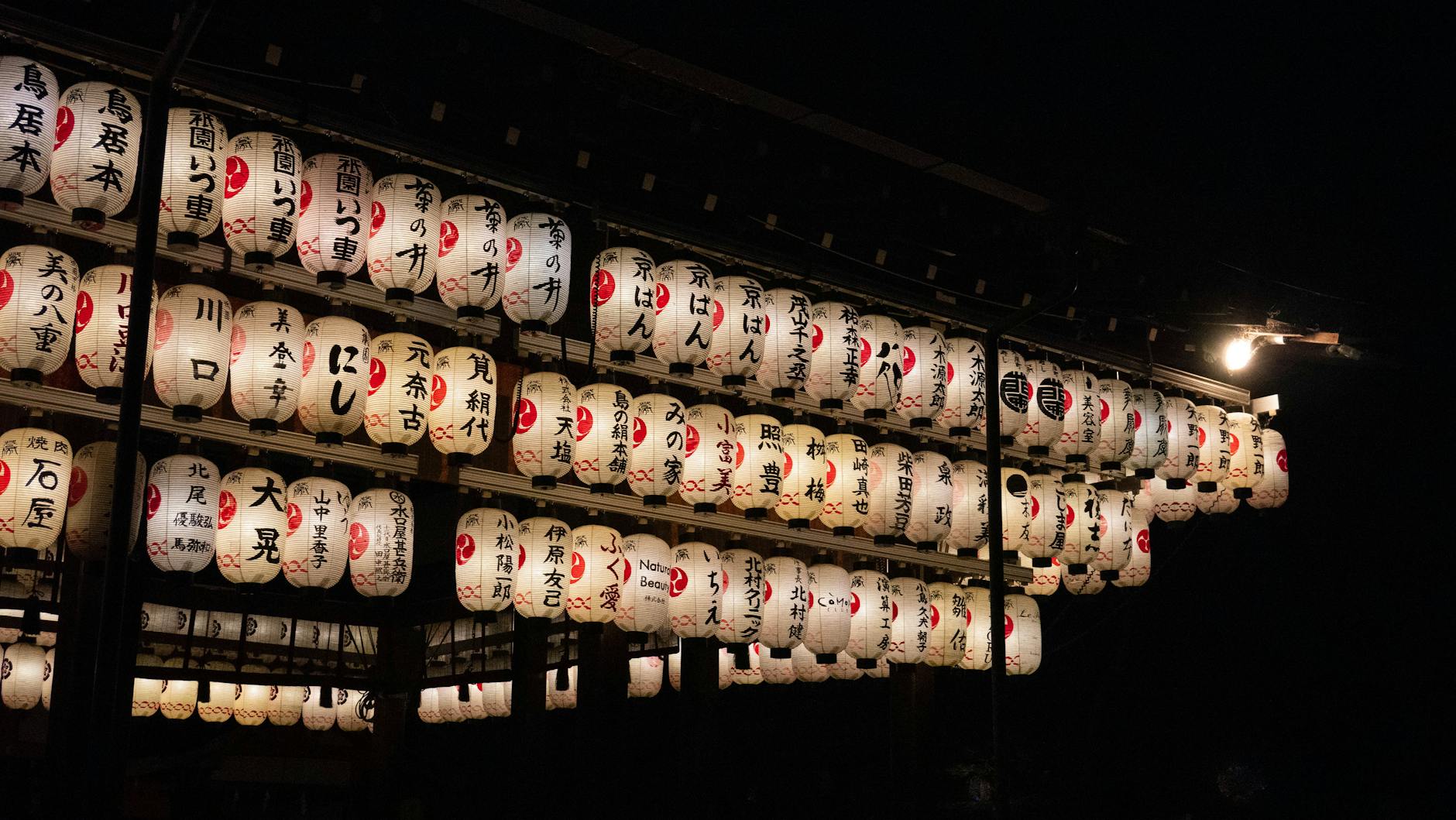
The spirits are welcomed home with small fires lit at the entrance to family homes or graves — mukaebi (welcome fire). In some regions, paper lanterns are floated on rivers or the sea to guide the spirits home. Families visit cemeteries to clean graves and invite the ancestors back.
August 13–15 — Obon Period
The spirits are with the living. In traditional homes, the ancestral altar is tended daily. Bon Odori (Obon folk dancing) takes place in temple and shrine courtyards every evening — circular dances to traditional music that vary significantly by region. Food is offered, incense kept burning.
Okuribi — August 15–16 (The Sending Off)
The spirits return to the afterlife on the final night. This is marked by okuribi (sending fires) and, in many regions, by floating lanterns (toro nagashi) on rivers or the sea. The lanterns carry the spirits away on the current. The sight of hundreds of paper lanterns drifting on dark water is one of the most moving things Japan produces.
Bon Odori: The Dance
Bon Odori (盆踊り) is the communal folk dance performed throughout Obon. Circular in formation, performed around a central raised platform (yagura) from which musicians and singers perform, it’s one of those things that looks simple and is completely absorbing once you’re inside it.
The dances vary entirely by region — the steps, the music, the costumes are all local. Some are slow and meditative; others are fast and energetic. The movements are designed to be learned on the spot — most Bon Odori are accessible to complete beginners.
You are encouraged to join. This is not a performance to watch from outside. Step into the circle, copy the movements of the people around you, and participate in something that has been done in this form for centuries.
Regional Variations — Obon Is Not One Thing
The regional diversity of Obon is what makes it fascinating. Here are the most notable variations:
Kyoto — Gozan no Okuribi (August 16)
The most visually spectacular Obon event in Japan. On the evening of August 16, five enormous bonfires are lit on five mountains surrounding Kyoto, each in the shape of a kanji character or symbol. The most famous is the Daimonji fire — the character 大 (dai, “large”) blazing on Daimonji-yama in the north. The fires are lit sequentially between 8:00pm and 8:30pm. Viewing spots along the Kamo River and from hotels on the city’s north side fill hours in advance. This is Obon at its most dramatic.
Tokushima — Awa Odori (August 12–15)
Technically an Obon festival, but Awa Odori has grown into Japan’s most famous dance event. The entire city of Tokushima becomes a performance space — organized dance troupes (ren) with distinctive music, costumes, and steps perform through the streets while crowds watch and, increasingly, are invited to join a “fool’s parade” (niwa-ka ren). Attendance: approximately 1.3 million people over four days. Japan’s festival calendar runs year-round — the complete Japanese festivals guide covers the major events beyond Obon season.
Akita — Kanto Festival (August 3–6)
Technically a harvest prayer festival rather than pure Obon, Kanto runs during the same period and is associated with Obon season in the regional mind. Performers balance enormous bamboo poles hung with dozens of paper lanterns — some over 12 meters tall, weighing 50kg — on their hands, foreheads, shoulders, and hips. Extraordinary skill. Extraordinary to watch.
Nishimonai (Akita) — Nishimonai Bon Odori (August 16–18)
One of Japan’s three great Bon Odori. The dancers wear haunting costumes — deep hats that completely shadow their faces, or silk fabric hiding their heads entirely. The effect is deliberately ghostly, representing the deceased returning. The dance is slow, graceful, and genuinely otherworldly. Less known internationally than Awa Odori but arguably the most culturally significant Bon Odori in the country.
Okinawa — Different Calendar, Different Customs
Okinawa follows the lunar calendar for Obon (dates shift yearly, typically August), and the festival has a distinct Ryukyuan character. The Eisa dance — performed with large taiko drums — is Okinawa’s version of Bon Odori. The spirits here are welcomed and sent off with different music, different ritual forms, and the particular spiritual culture of the Ryukyu Islands.
Toro Nagashi — Floating Lanterns
In many communities, the final night of Obon is marked by floating paper lanterns (toro) on rivers, lakes, or the sea. The lanterns carry candles inside and drift in the current, carrying the spirits back. The best-known toro nagashi events take place on August 16 — the same night as Kyoto’s Gozan no Okuribi — in cities and towns with navigable rivers.
Hiroshima’s toro nagashi, on the Ota River on August 6 (Peace Memorial Day), has particular resonance — thousands of lanterns floating in memory of the atomic bomb victims, combined with the ancestral memorial tradition of Obon. It is one of the most moving events in Japan.
Visiting Japan During Obon: Practical Information
Travel Chaos
The week around August 13–15 is one of Japan’s three major travel periods (along with Golden Week and New Year’s). Shinkansen and highway traffic peaks. If you’re planning to move between cities during this period, book well in advance or expect delays. Alternatively, move against the flow — central Tokyo and Osaka empty somewhat while regional areas fill up.
Business Hours
Some smaller restaurants, shops, and businesses close for Obon. Major tourist infrastructure (hotels, convenience stores, major attractions) stays open. Check in advance for anywhere specific you want to visit — japan.travel’s festivals and events calendar is updated regularly with local listings.
The Atmosphere
Despite the travel chaos, Obon season has a particular quality — warm evenings, yukata in the streets, festival music drifting from shrine courtyards. It’s a good time to be in Japan if you’re not trying to move around too much.