Home · Japan Culture · Guide № 0146

Tea Ceremony Japan: What to Expect, Where to Go, and How to Participate

Author Asuka
Published
Read time 8 min
Last verified
Tea Ceremony Japan: What to Expect, Where to Go, and How to Participate

The first thing that strikes most people when they walk into a tearoom is the silence. Not the uncomfortable kind — the kind that feels deliberate, held open on purpose. The tatami floor, the single scroll in the alcove, the sound of water heating in the iron kettle. Before a single bowl of tea has been prepared, the room has already told you something.

The Japanese tea ceremony (茶道, chado or sado, literally “the way of tea”) is one of the most complete expressions of Japanese aesthetics in existence. It’s also one of the most misunderstood. Visitors expect a ritual. What they get — when the experience is genuine — is closer to a moving meditation practised by two or more people together.

This guide covers everything: the history, the philosophy, the procedure, where to experience it, what to wear, how to behave, and which cities are worth going to for the real thing.

A Brief History of the Tea Ceremony

Tea came to Japan from China in the 8th century, introduced by Buddhist monks who drank it to stay alert during long meditation sessions. For centuries it remained the preserve of monks and the aristocracy — a refined, expensive beverage with obvious cultural cachet.

It was during the Muromachi period (1333–1573) that tea drinking among the samurai class evolved into something more deliberate. The wealthy held tocha competitions, guessing varieties of tea, surrounding themselves with Chinese porcelain and lacquerware. It was performative display — status through objects.

The reaction against this became the foundation of the modern tea ceremony. Murata Juko (1423–1502) introduced Zen principles of simplicity and imperfection. His successors refined the philosophy further. But it was Sen no Rikyu (1522–1591) who established the aesthetic still practised today: rustic simplicity, humble materials, total attention to the present moment.

Rikyu articulated four principles that define chado to this day:

  • Wa (和) — harmony
  • Kei (敬) — respect
  • Sei (清) — purity
  • Jaku (寂) — tranquillity

Every element of the ceremony — the choice of bowl, the seasonal flower, the scroll, the temperature of the room — is selected to embody these four qualities. Rikyu was later forced to commit ritual suicide by order of Toyotomi Hideyoshi (the reasons are still debated by historians), but his three grandsons founded the schools that continue to teach chado today: Omotesenke, Urasenke, and Mushanokoji-senke.

The Philosophy: What the Tea Ceremony Is Actually About

Chado sits at the intersection of several distinctly Japanese philosophical traditions. Understanding them makes the ceremony legible in a way that surface description doesn’t.

Ichi-go ichi-e (一期一会) — “one time, one meeting.” The idea that every encounter is unique and unrepeatable, and should be treated as such. The host prepares for this specific gathering with this specific set of guests. The bowl chosen, the scroll hung, the seasonal sweets selected — none of it is generic. It’s assembled for this moment and will never be assembled in exactly this way again.

Wabi (侘び) — the aesthetic of imperfect, incomplete, impermanent things. A cracked bowl with a gold repair. A flower past its perfect peak. A tearoom with rough clay walls. Wabi is not poverty; it’s the recognition that beauty lives in irregularity and transience.

Ma (間) — the use of empty space and pause. The silence between movements in the ceremony is as intentional as the movements themselves. Nothing is rushed. The host’s actions are slow and complete.

If you go in looking for entertainment, you’ll probably be bored. If you go in prepared to be still, the ceremony does something to your nervous system that’s genuinely difficult to describe.

The Tea Ceremony Procedure

A full, formal tea ceremony is a multi-hour event that begins with a kaiseki meal, followed by thick tea (koicha), and ends with thin tea (usucha). Very few visitors experience the full version. Most will attend an abbreviated ceremony focused on thin tea — this is the norm for tourist experiences and is not a lesser version, just a shorter one.

Before Entering

Traditional ceremony venues have a garden (roji) — a stone path leading to the teahouse. Walking it is part of the preparation: it marks the transition from the ordinary world to the tea world. At the entrance is a stone water basin (tsukubai) where guests wash their hands. Entering guests bow through a small, low doorway (nijiriguchi) — its height forces everyone to bow, equalising social rank.

In the Tearoom

Guests sit in seiza (kneeling, sitting back on heels) on the tatami floor. The head guest (shokyaku) sits closest to the tokonoma (alcove), where a scroll and seasonal flower arrangement are displayed. Guests observe the decorations and may comment briefly — the host has chosen them deliberately for the occasion.

Preparing the Tea

The host cleans each utensil with precise, choreographed movements in front of the guests. The tools are:

  • Chasen — bamboo tea whisk
  • Chashaku — bamboo tea scoop
  • Natsume or cha-ire — tea container for powdered matcha
  • Chawan — tea bowl
  • Kama — iron kettle

Hot water is ladled from the kettle with a bamboo ladle. Matcha powder is scooped, water added, and the tea whisked to a smooth froth. The process is slow, unhurried, and exact.

Receiving and Drinking the Tea

A Japanese sweet (wagashi) is served before the tea. Eat it before the bowl arrives. When the tea bowl is placed before you, bow. Pick it up with your right hand, rest it on your left palm. Rotate it clockwise two or three times (turning the front of the bowl away from you) — this is respect for the bowl, not touching your lips to its “face.” Drink in two to three sips. Wipe the rim where your lips touched. Rotate back counterclockwise to return the front and place it down. Bow and express appreciation.

In most tourist ceremonies, the host or an assistant will walk you through each step. Don’t panic about getting it perfect. Attention and sincerity matter more than technical precision for a first-time guest.

Types of Tea Ceremony Experience

Not all tea ceremony experiences are equal. Here’s a breakdown of what’s actually available:

Tourist Tea Ceremonies (30–60 minutes)

The most accessible format. You sit, watch a demonstration, are served tea and a sweet, and may be guided through the steps. Quality varies enormously. Some are beautifully done in traditional tearooms; others are staged in hotel lounges with minimal authenticity. Price range: ¥1,000–¥4,000.

Participatory Experiences (60–90 minutes)

You actually prepare your own bowl of tea under instruction. More hands-on, more memorable, usually more expensive (¥3,000–¥8,000). Operators like Urasenke in Kyoto run these regularly.

Formal Lessons (ongoing)

If you’re living in Japan or staying for an extended period, many tea schools offer beginner lessons — typically weekly, with seasonal progression. This is where the real practice lives. Expect to spend at least six months before you begin to feel fluent in the movements.

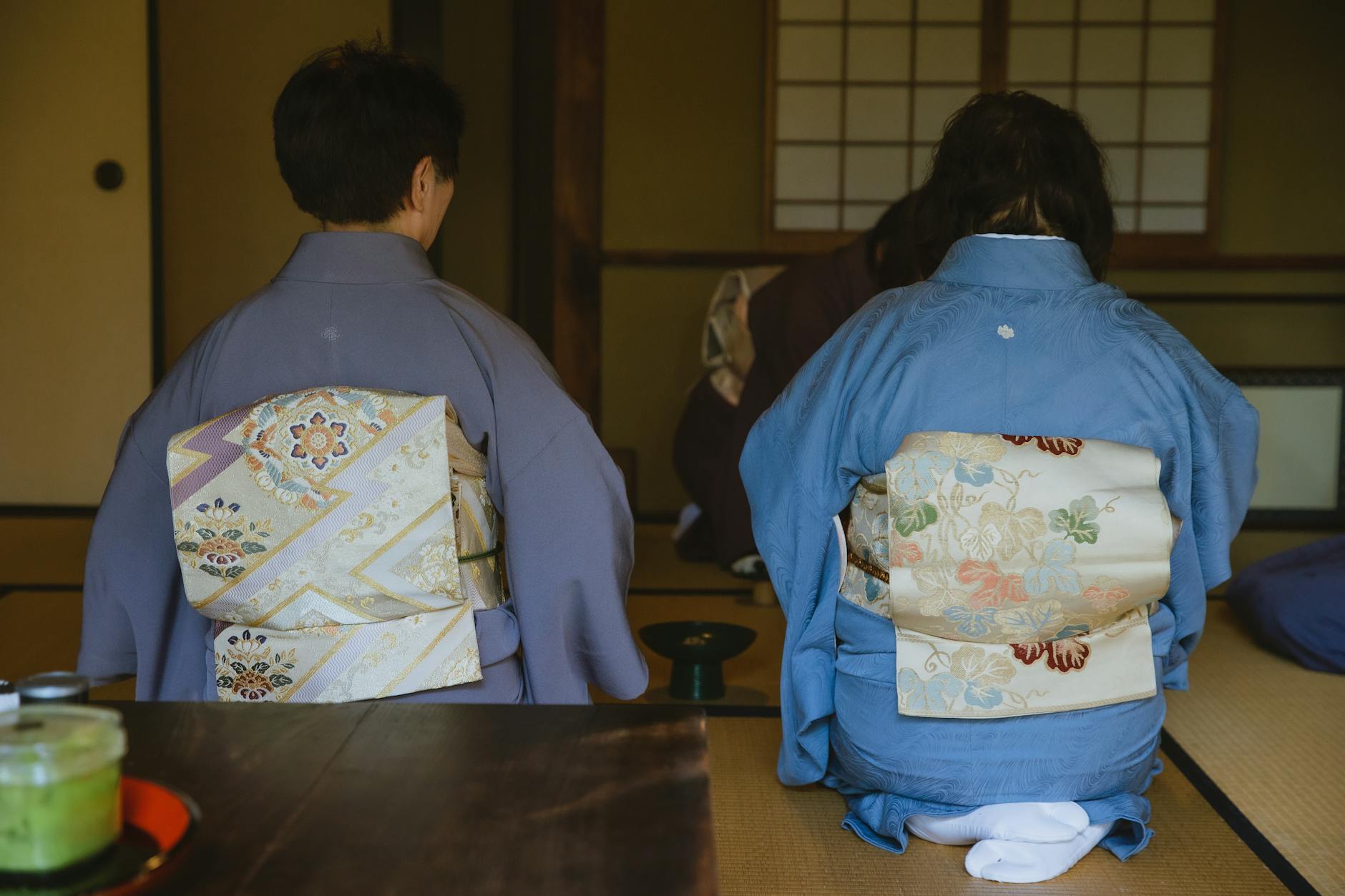
Tea Ceremony Courses with Kimono

Popular with visitors — you dress in kimono, then participate in the ceremony. More theatrical, but not inauthentic if done at a genuine venue with a practised host.

Where to Experience the Tea Ceremony in Japan

Kyoto

The centre of Japanese tea culture. Uji, just south of Kyoto, has been producing matcha for centuries and remains the best place in Japan to taste the highest-quality green tea. In Kyoto itself, options include Urasenke (the largest tea school in Japan), En tea ceremony experience in Gion, and experiences at Daitoku-ji temple complex. The neighbourhood of Higashiyama has several well-regarded venues within walking distance of major sights.

Tokyo

Less concentrated than Kyoto but with options. Hamarikyu Gardens has a teahouse in a traditional garden setting — one of the most atmospheric in Tokyo. The Odaiba area and several upscale hotels also offer experiences. The National Museum in Ueno hosts occasional tea ceremony events.

Kanazawa

Often overlooked but excellent. The Higashi Chaya geisha district has traditional teahouses, and the Kenroku-en garden area has several ceremony venues. Kanazawa’s samurai heritage means its tea culture has distinct local characteristics.

Nara

Isuien Garden and Yoshikien Garden both offer tea ceremony experiences with views of the garden — quieter and less commercial than many Kyoto options.

Practical: What to Wear and Bring

  • Clothing: Modest, nothing distracting. Avoid loud patterns or heavy perfume — both detract from the sensory atmosphere of the ceremony. If wearing a skirt, kneeling will be necessary, so length matters.
  • Socks: You’ll remove your shoes. Clean socks without holes. This is Japan — people will notice.
  • Jewelry: Remove rings and bracelets that could scratch the tea bowls, which may be centuries old and extremely valuable.
  • Phone: Ask before photographing. Many formal ceremonies prohibit it. Many tourist ceremonies allow it at specific points. Don’t assume.

The Tea Bowls: What They’re Worth

This surprises most visitors. A tea bowl used in a formal ceremony may be hundreds of years old and worth millions of yen. The ones used in tourist ceremonies are generally not, but the shapes, glazes, and regional styles still carry meaning. Raku ware (Kyoto), Hagi ware (Yamaguchi), Karatsu ware (Saga) — each has a different feel in the hand and a different relationship to the matcha. The host’s selection of bowl for a given occasion is not casual.

Tea Ceremony and the Seasons

The tea calendar is seasonal in a very precise way. There are two main periods: the ro season (November–April), when a sunken hearth is used to heat the kettle, and the furo season (May–October), when a portable brazier sits on the tatami. The tea room’s decorations, the sweets, the choice of bowl, the flower — all change with the season. A ceremony in November feels entirely different from one in May, even in the same room.

If you want a particularly atmospheric experience, November is arguably the finest month. The hearth is opened for the season, chestnuts appear in the wagashi, and the whole aesthetic tilts towards warmth and interiority.

Connecting the Tea Ceremony to Broader Japanese Culture

Understanding chado gives you a key to Japanese aesthetics that unlocks other things: why a kaiseki meal is served in small courses of specific textures and temperatures; why Japanese garden design uses restraint rather than abundance; why the best Japanese craft objects look deliberately imperfect.

The tea ceremony is the concentrated version. Japanese culture is the expanded one.

For more on the cultural context that surrounds it, see our complete guide to Japanese culture and traditions. And if you’re planning a trip to Kyoto specifically, the best places to visit in Japan guide has a full Kyoto section with practical logistics.

For background on the philosophy and history of the tea ceremony, the Wikipedia article on the Japanese tea ceremony is thorough and well-sourced. The Japan National Tourism Organization also maintains updated listings of tea ceremony experiences across major cities.