Cherry blossom season is the reason Japan tourism doubles in spring. And yes — it really is that beautiful. Living in Osaka for years, sakura still gets me every year. But watching thousands of tourists arrive expecting a gentle stroll through pink petals and leave with blistered feet, soaked jackets, and photos that are 80% other people’s umbrellas — here’s the real version.
When Do Cherry Blossoms Bloom in Japan?
The sakura front (sakura zensen) moves north like a wave, starting in Kyushu in mid-to-late March and reaching Hokkaido in late April or early May. Within each region, the blooming window is about two weeks — and full bloom (mankai) lasts maybe five to seven days. One warm week or one cold snap can shift everything by a week in either direction.
This is why sakura planning is equal parts excitement and anxiety. The forecasts are predictions, not promises.
Cherry Blossom Peak Bloom Dates by City (Approximate)
| City / Region | Early Bloom | Full Bloom (Mankai) | Peak Viewing Window |
|---|---|---|---|
| Naha, Okinawa | Late Jan | Early Feb | Late Jan–Mid Feb |
| Fukuoka, Kyushu | Late Mar | Late Mar–Early Apr | Late Mar–Early Apr |
| Tokyo | Mid–Late Mar | Late Mar–Early Apr | Late Mar–Early Apr |
| Kyoto | Late Mar | Early Apr | Early–Mid Apr |
| Osaka | Late Mar | Late Mar–Early Apr | Early Apr |
| Hiroshima | Late Mar | Early Apr | Early–Mid Apr |
| Nagoya | Late Mar | Early Apr | Early–Mid Apr |
| Sendai, Tohoku | Mid Apr | Mid–Late Apr | Mid–Late Apr |
| Hirosaki, Aomori | Late Apr | Late Apr–Early May | Late Apr–Early May |
| Sapporo, Hokkaido | Late Apr | Early May | Early–Mid May |
Important: these are long-term averages. In warm years, Tokyo can hit full bloom in mid-March. In cool years, it can lag into mid-April. JNTO’s annual cherry blossom forecast and japan-guide.com’s live tracker are the best free tools to follow from February onwards.
Sakura in Okinawa: A Different Species
Worth noting: Okinawa’s cherry blossoms (Kanhizakura) are a different variety — deep pink, almost magenta, and they bloom in late January to early February. They don’t produce the canopy effect of mainland Somei Yoshino trees, but they’re striking in their own way and arrive when the rest of Japan is still fully winter. Nago Cherry Blossom Festival is the main event.
Best Cherry Blossom Spots in Japan
The famous spots are famous for a reason. But some of them are genuinely overwhelming in peak season — and there are equally beautiful alternatives with a fraction of the foot traffic.
Tokyo
- Ueno Park: The classic Tokyo hanami spot — cherry tree tunnel, food stalls, enormous crowds. Go at dawn (around 6am) if you want a quiet walk, or embrace the chaos in the afternoon.
- Chidorigafuchi: Rowboat canal lined with sakura. Arrive before 8am or join the queue — waiting times can hit 90 minutes on peak weekend afternoons.
- Shinjuku Gyoen: One of Japan’s best parks for sakura, with multiple varieties that extend the season. ¥500 entry, no alcohol (making it calmer than Ueno). Multiple tree types mean blooms from late March through mid-April.
- Less crowded pick: Koenji Kishimojin Zelkova Road. Cherry trees along a quiet residential street — beautiful and almost nobody goes there.
Kyoto
- Maruyama Park: Famous for the single weeping cherry tree lit at night. Very busy but worth it for yozakura (night sakura) viewing.
- Philosopher’s Path: 2km canal walk lined with cherry trees. Beautiful in early morning, a packed corridor by 10am.
- Kiyomizudera: Cherry blossoms framing the wooden stage with mountains behind. Stunning for photos but very crowded.
- Less crowded pick: Daigoji Temple’s sakura gardens (slightly south of central Kyoto) — genuinely beautiful, far fewer visitors, worth the extra journey.
Osaka
- Osaka Castle Park: 3,000 cherry trees around the castle moat — one of Japan’s best settings. Food and drink vendors everywhere. Gets crowded but the park is large enough to find quieter corners.
- Kema Sakuranomiya Park: 4.7km of cherry trees along the Okawa River. Local favourite, slightly less touristy than Osaka Castle Park.
- Less crowded pick: Tsurumi Ryokuchi Park — a large park in eastern Osaka with over 2,000 trees, popular with families and relatively unknown to tourists.
Beyond the Big Three
- Hirosaki Castle, Aomori: Japan’s most famous castle sakura — 2,600 trees including 300-year-old weeping cherries, petals drifting into the moat. Late April to early May timing means it falls after main Tokyo/Kyoto season.
- Takato Castle Ruins, Nagano: Called Japan’s top three best spots by cherry blossom experts. Filled with dark pink Komahiganzakura variety, absolutely stunning.
- Yoshinoyama, Nara: A mountain covered in 30,000 cherry trees — an ocean of blossoms visible from below. Very busy on peak weekends but the scale is unlike anything in the cities.
- Kakunodate, Akita: A preserved samurai town with weeping cherry trees lining the historic streets. Photographs like a painting and gets a fraction of Kyoto’s crowds.
Plan Your Spring Trip
Cherry blossoms are just one part of spring in Japan. For the full timing picture, the best time to visit Japan guide covers all seasons month by month. If you’re still figuring out where to go beyond Tokyo and Kyoto, the best places to visit in Japan guide covers the top destinations worth adding to your spring itinerary. And once you’re sorting logistics, the Japan travel guide has everything you need from visas to transport.
Night Sakura (Yozakura) — Why You Should Go After Dark
Most visitors do sakura in the daytime. But yozakura — cherry blossoms lit up at night — is a different experience entirely. The trees glow white-pink against black sky. The crowds thin after dark. Major parks and castle grounds run official illumination events from late March through early April.
Best yozakura spots: Osaka Castle Park, Osaka Nakanoshima Park (riverside lantern boats + lit trees), Kyoto’s Maruyama Park (the weeping cherry), and Hirosaki Castle in Aomori. Most illuminations run until 10pm — arrive at 8–9pm to enjoy them with manageable crowds.
Hanami: How to Do a Cherry Blossom Picnic Right
Hanami — literally “flower viewing” — is the Japanese tradition of gathering under blooming cherry trees for food, drinks, and conversation. It’s one of Japan’s most beloved seasonal rituals and you absolutely should do it.
What to Bring
- Blue tarp: Buy one at a 100-yen shop or Don Quijote for ¥200–500. This is what everyone uses to mark their picnic spot.
- Food and drinks: Convenience store bento, onigiri, tamagoyaki — or pick up from nearby markets. Alcohol is fine in most parks (Shinjuku Gyoen is the main exception).
- Layers: Evenings can be cold — 10°C is common in late March. Don’t underestimate it.
- Garbage bags: Hanami parks often don’t have bins. Take your rubbish with you.
Hanami Etiquette
- Arrive early to stake out a spot on peak days — some people send one person ahead at 7am to lay down a tarp
- Keep music at a reasonable volume — some parks prohibit amplified music
- Don’t shake or climb the trees to make petals fall — this damages the bark
- Keep your area clean — locals take this seriously
- Peak hours are typically 11am–4pm on weekend days; weekday mornings are dramatically calmer
Cherry Blossom Photography Tips
Getting good photos requires either getting up very early or finding less-visited spots. Here’s what actually works:
- Golden hour (6–8am): Soft light, no crowds, petals still fresh. The same spots that look chaotic at noon look peaceful at dawn.
- Overcast days: Flat grey light is actually ideal for sakura photography — it makes the pink pop without harsh shadows. Don’t write off cloudy days.
- Look down: Fallen petals floating on water (hanagasumi) or carpeting the ground are often more photogenic than looking up through branches.
- Include context: Shrine gates, traditional buildings, bridges. A photo of just blossoms could be anywhere. Put Japan in the frame.
- Avoid weekends between 10am–5pm at popular spots unless you want to photograph crowds. The trees are there Monday morning too.
Different Cherry Blossom Varieties
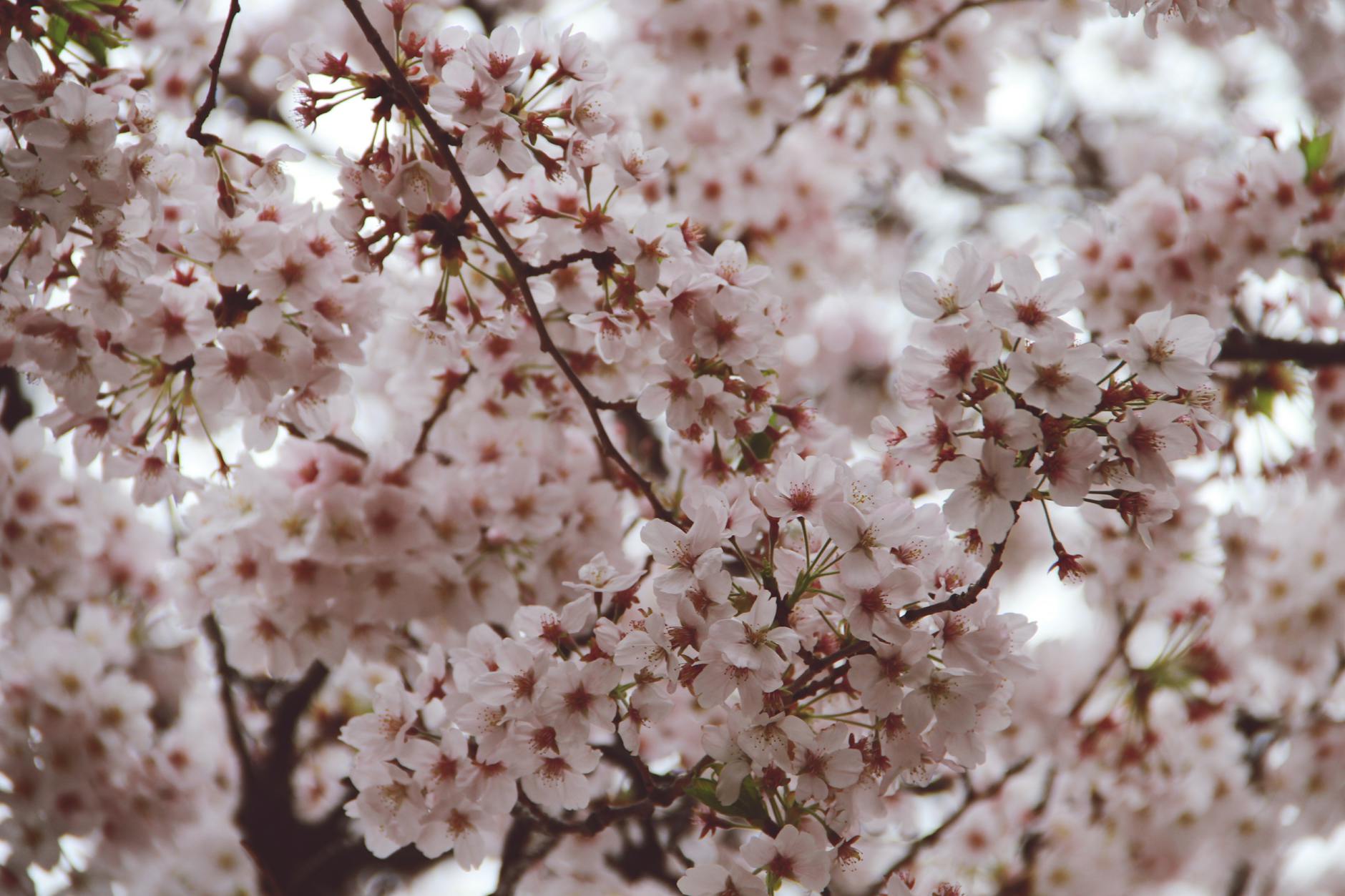
Not all sakura are the same. The dominant variety (Somei Yoshino) is what you see in most cities — pale pink, almost white, blooming before leaves appear. But Japan has over 400 cherry blossom varieties:
- Somei Yoshino: The classic. Pale pink, crowds of delicate flowers. Blooms before leaves appear, creating that pure-pink canopy effect.
- Shidarezakura (weeping cherry): Drooping branches covered in pink blossoms. Often found in temple gardens. Maruyama Park’s famous tree is this variety.
- Yaezakura (double cherry): Ruffled, full flowers — more like a peony than a typical cherry. Blooms 1–2 weeks after Somei Yoshino. Extends the season into late April.
- Kanzan: Bright pink, showy variety. Often seen in parks and along streets, blooms later than Somei Yoshino.
- Kawazu-zakura: Early-blooming variety (late February in Izu Peninsula) — deep pink, larger flowers. First sakura of the season for Honshu.
Knowing this matters practically: parks with multiple varieties have longer bloom seasons. Shinjuku Gyoen in Tokyo, for example, has over 1,000 trees of 75 varieties — blooms extend from late March through mid-April.
Cherry Blossom Season Budget Tips
Sakura season is Japan’s most expensive travel window. Here’s how to manage costs:
- Book accommodation 4–6 months ahead. Prices in Kyoto and Tokyo during peak bloom can be 2–3x normal rates. Early booking is the only real solution.
- Consider surrounding cities. Staying in Osaka and day-tripping to Kyoto is significantly cheaper than sleeping in Kyoto during peak bloom.
- Shoulder the peak. The week before full bloom (just before mankai) has beautiful blossoms, lower prices, and smaller crowds than full-peak weekend.
- Hanami is free. The best cherry blossom experience in Japan — sitting under the trees with a convenience store bento and cold tea — costs almost nothing.
- Avoid Golden Week overlap. If your trip extends into late April–early May, Golden Week significantly raises prices and crowds in popular areas.
Tracking the Forecast: Best Tools
Sakura forecasts become available from late January and update frequently. The most reliable sources:
- JNTO: jnto.go.jp/sakura — official Japan tourism forecast with city-by-city breakdown
- Japan-guide.com: Comprehensive forecast with tracker and live updates throughout the season
- Weathernews Japan: Japanese app (available in English) with real-time bloom status reports from local observers
- Sakura Navi app: Crowdsourced bloom status — useful when you’re on the ground
None of these are 100% accurate more than two weeks out. The closer you get to your travel dates, the more reliable the forecasts become. If you’re planning around the blossoms specifically, build flexibility into your itinerary — arriving 2–3 days before forecast peak is usually the sweet spot.
The Bottom Line
Cherry blossom season is real, beautiful, and worth planning a trip around. But it rewards people who plan ahead, go early in the day, and look beyond the famous spots. The tourists fighting for the same Chidorigafuchi rowboat photo are missing the quiet neighbourhood park two stops further on the train — where petals are just as pink and there’s room to breathe.
The blossoms don’t care how many people are watching. Go find your own.