The bout lasts an average of six seconds. You spend most of the day watching the preparation for those six seconds.
That sentence either puts you off sumo entirely or makes you deeply curious, and if you’re in the second group, attending a live sumo tournament is one of the most rewarding things you can do in Japan. The sport is Japan’s national discipline — not just sport, but ceremony, calendar, and cultural institution rolled into one. Understanding it changes how you watch it.
This guide covers everything: the basics of sumo, the tournament structure, how to buy tickets, what attending is actually like, and the Shinto religious context that makes sumo unlike any other sport in the world.
What Sumo Actually Is
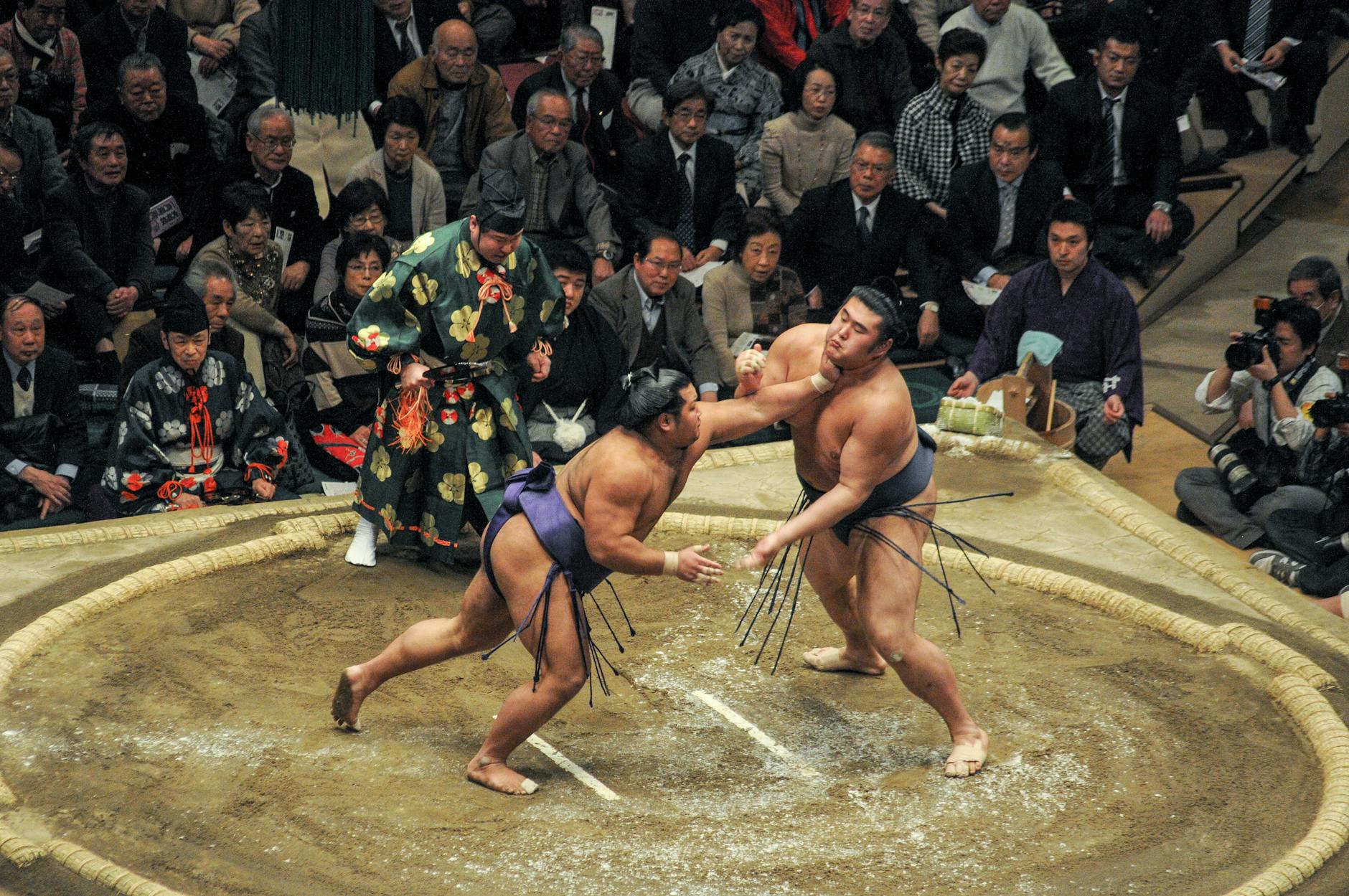
Sumo (相撲) is a full-contact wrestling sport in which two wrestlers (rikishi) compete to push each other out of the circular ring (dohyo) or force any part of the opponent’s body other than the foot soles to touch the ground. That’s the entire technical ruleset.
The simplicity is deceptive. There are 82 recognised winning techniques (kimarite), from straightforward pushes (oshi-taoshi) to complex throws and leg sweeps. Matches at the highest level involve elite athletes who weigh between 100kg and 200kg+ and move with speed and coordination that’s genuinely startling when you see it live.
But sumo is also a Shinto ritual. The dohyo (clay ring) is purified before tournaments. Salt is thrown into the ring before each bout for purification. The referee (gyoji) wears robes based on Heian-period court costume. The roof hanging over the ring in major venues is modelled on a Shinto shrine. The yokozuna (grand champion) performs a ring-entering ceremony (dohyo-iri) of extraordinary solemnity — a sequence of movements rooted in sacred practice, not performance.
None of this is decorative. It’s the architecture of the sport.
The Ranking System
Sumo has a strict pyramid ranking system that determines every aspect of a wrestler’s life — income, room in the stable, who cooks, who cleans.
| Division | Rank Level | Notes |
|---|---|---|
| Makuuchi (幕内) | Top division, ~42 wrestlers | Where the stars are |
| Jūryō (十両) | Second division, ~28 wrestlers | Professional salary starts here |
| Makushita (幕下) | Third division | No salary, unpaid wrestlers |
| Sandanme, Jonidan, Jonokuchi | Lower divisions | Training and development |
Within Makuuchi, the sub-ranks in descending order are: Yokozuna (最高位), Ozeki, Sekiwake, Komusubi, and Maegashira (numbered 1–17). Promotion and demotion occur between tournaments based on win-loss records (8 wins from 15 bouts keeps you at your current rank; more promotes; fewer demotes).
There are currently (2026) three Yokozuna — the title is for life, but pressure to retire comes when performance declines. Unlike other ranks, Yokozuna are never demoted; they are expected to retire with dignity when they can no longer perform at the expected level.
The Six Annual Tournaments (Honbasho)
Six grand tournaments are held each year, each lasting 15 days. The schedule:
| Tournament | Location | Month |
|---|---|---|
| Hatsu Basho (初場所) | Tokyo — Ryogoku Kokugikan | January |
| Haru Basho (春場所) | Osaka — EDION Arena | March |
| Natsu Basho (夏場所) | Tokyo — Ryogoku Kokugikan | May |
| Nagoya Basho (名古屋場所) | Nagoya — Dolphins Arena | July |
| Aki Basho (秋場所) | Tokyo — Ryogoku Kokugikan | September |
| Kyushu Basho (九州場所) | Fukuoka — Marine Messe | November |
Each tournament runs from a Sunday in the middle of the month through to the following Sunday (15 days). The top division bouts happen in the afternoon and evening, with the most important matches scheduled last. The final day (senshuraku) is the most dramatic — the tournament winner is determined, and if there’s a playoff, it happens that day.
How to Buy Sumo Tickets
Official Channels
The Japan Sumo Association sells tickets through the official Sumo Association website. Tickets go on sale approximately one month before each tournament. For Tokyo basho (January, May, September), tickets sell out quickly — particularly box seats and premium reserved seats. The Osaka March tournament also books fast.
Ticket Types
- Masu seats (box seats): Traditional floor-level seating in groups of four, cushioned. You sit cross-legged on a cushion at low tables. Closest to the ring. Sold as a box (space for four), regardless of group size. Around ¥10,000–¥14,000 per person.
- Chair seats (isu-seki): Fixed seats on the upper levels. More comfortable for Westerners not accustomed to kneeling. ¥3,800–¥8,500.
- Arena seat (arena-seki): The cheapest seats, furthest from the ring. Around ¥3,800. Still worth it — the atmosphere translates even from a distance.
Day-of Tickets
At Ryogoku Kokugikan, a limited number of general admission seats (jiyu-seki) are sold on the day of each match, from around 8:00am. Arrive early — lines form before opening. These are cheap (around ¥2,200–¥3,000) and placed high up, but for the experience of a single day’s sumo, perfectly adequate.
What to Expect at a Tournament
The Day’s Structure
Tournaments start at 8:00–9:00am with the lowest division bouts. These early bouts draw sparse crowds. The arena fills progressively through the day. The Makuuchi (top division) schedule begins around 16:00, with the final bouts ending around 18:00.
Experienced sumo-watchers often arrive mid-afternoon — you catch some of the Jūryō division (strong wrestlers, less celebrity but technically excellent), the full Makuuchi parade, and all the top-level action.
Pre-Bout Ceremony
The most striking thing about live sumo is how long each bout takes to begin. Top-division wrestlers have up to four minutes for preparation rituals before the actual match starts. They face each other, squat, slam the ground, throw salt (purification), return to their corner, wipe down, drink ritual water, return to the ring. Again. The rhythm is slow, deliberate, and somehow gripping. The crowd tracks the energy escalating with each exchange.
The gyoji referee stands between them with his war fan (gunbai), watching for the moment both wrestlers touch the clay simultaneously — the start (tachi-ai). It’s never announced. It simply happens.
The Bouts
Top-division bouts last seconds to minutes. The technique is decided in the first collision (tachi-ai) — the initial charge determines who gets inside position, and inside position usually wins. Longer matches involving belt grabs (yotsu-zumo) are slower and more technical. The crowd responds to everything — a good throw draws a roar, a particularly dominant win draws a shower of cushions (zabuton nage) from the masu seats, which is technically prohibited but absolutely happens.
Atmosphere and Food
Food and beer are sold throughout the venue. The traditional sumo stadium food is chanko-nabe — the protein-heavy hotpot that wrestlers eat daily. You can buy it in the arena. Beer, sake, bentos. The atmosphere is relaxed between bouts and electric during them.
Sumo Stables and Training
Sumo wrestlers live and train in communal stables (heya), where daily life is strictly hierarchical — junior wrestlers serve senior ones, wake first, sleep last. Training (keiko) begins daily at 6:00am.
Some stables in the Ryogoku district offer morning practice viewing for small groups — typically organized through your hotel concierge or sumo tour operators. Not all stables are open to visitors, and the ones that are require respectful, quiet observation. This is not a tourist performance; it’s a wrestler’s working morning.
The Yokozuna Dohyo-iri
The ring-entering ceremony performed by Yokozuna before tournaments is one of Japan’s most extraordinary ritual performances. The ceremony lasts several minutes and involves specific arm and leg positions, foot stamps, and a final moment of absolute stillness. It’s performed in complete silence from the crowd.
Each Yokozuna performs the ceremony in one of two styles (Unryu or Shiranui), indicating which lineage of wrestling philosophy they follow. The distinction is visible in the shape of the rope (tsuna) worn around the waist and the specific arm positions during the ceremony.
Getting to Ryogoku Kokugikan
Ryogoku station on the JR Sobu line, or Ryogoku station on the Toei Oedo subway line. Five-minute walk. The neighborhood is sumo country — stables, chanko restaurants, the sumo museum, and the distinctive sight of wrestlers (much taller and wider than everyone else) moving through the streets in yukata.
For broader trip planning, see our Japan travel guide. For the cultural context around sumo and other Japanese traditions, see the Japanese culture and traditions guide.